Gobustan National Park
Thousands of prehistoric rock carvings, some over 10,000 years old, plus nearby mud volcanoes.
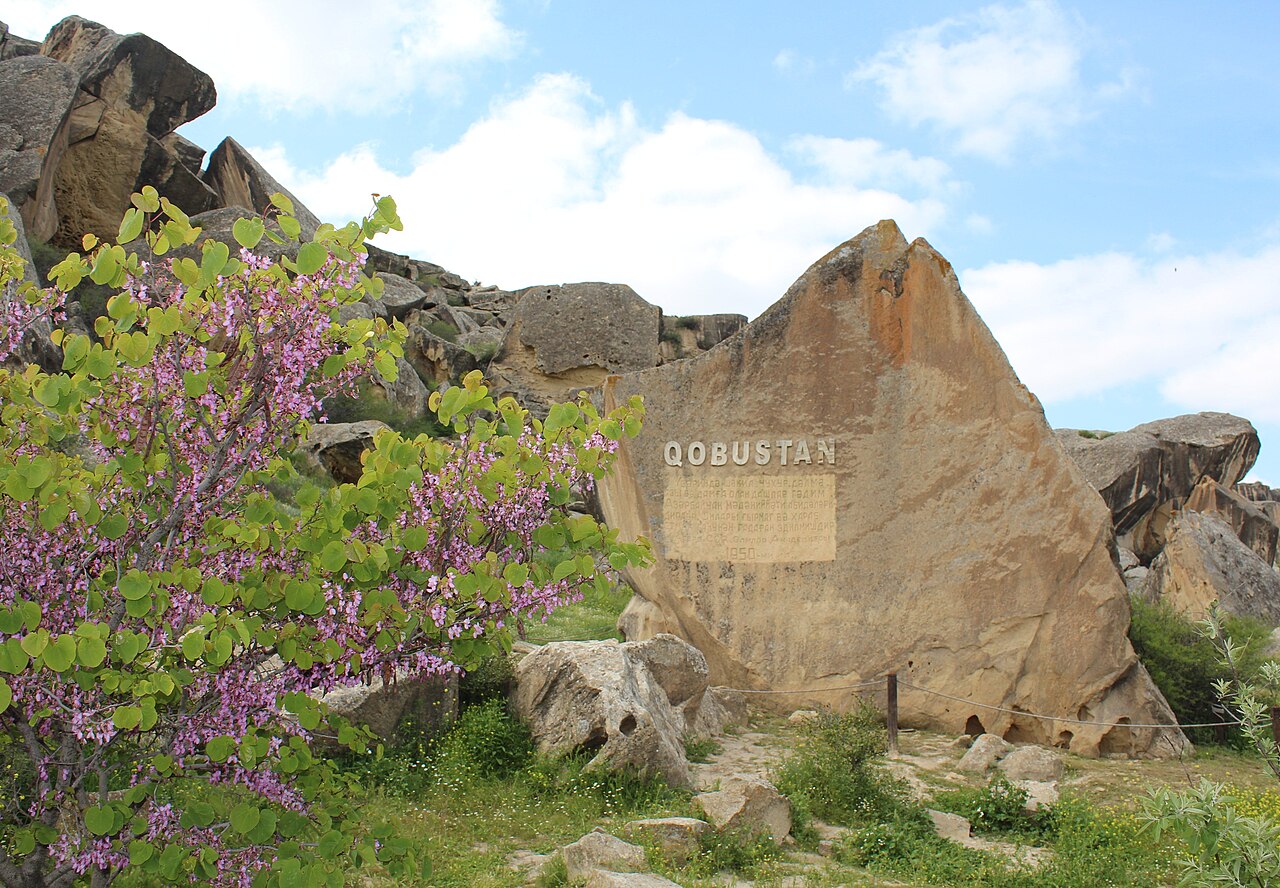
About
Gobustan is a dry, stony semi-desert with low sandstone ridges south-west of Baku, scattered with big boulders and shallow caves. On the rocks are carved thousands of images of people, animals, boats, hunting scenes and ritual dances, made by many generations over a very long period.
A modern museum at the entrance gives context before you walk among the rocks, and a guide can point out the best figures. A short drive away, the Gobustan mud volcanoes bubble with cool grey mud, a strange and unforgettable landscape. Bring a hat and water, because there is almost no shade.
History
The carvings at Gobustan were made over a very long span, with the oldest thought to date from the end of the last Ice Age, roughly 10,000 years ago or earlier, and later ones from the Bronze Age and even the Middle Ages. The images show a way of life that changed as the climate and the nearby Caspian shoreline shifted, from big-game hunting to herding and fishing. Many of the boat carvings caught the attention of the Norwegian explorer Thor Heyerdahl, who visited in the 1960s and argued that they pointed to ancient sea travel across northern waters, a theory that scholars continue to debate. The area was made a state reserve in 1966 to protect the rock art from quarrying. In 2007 it was inscribed by UNESCO as the Gobustan Rock Art Cultural Landscape, covering several rock-art areas and the mud volcanoes nearby. Azerbaijan has hundreds of mud volcanoes, a result of the gas and oil beneath the land, and some have erupted dramatically in the past.
UNESCO World Heritage: Inscribed 2007.