Momine Khatun Mausoleum (Nakhchivan)
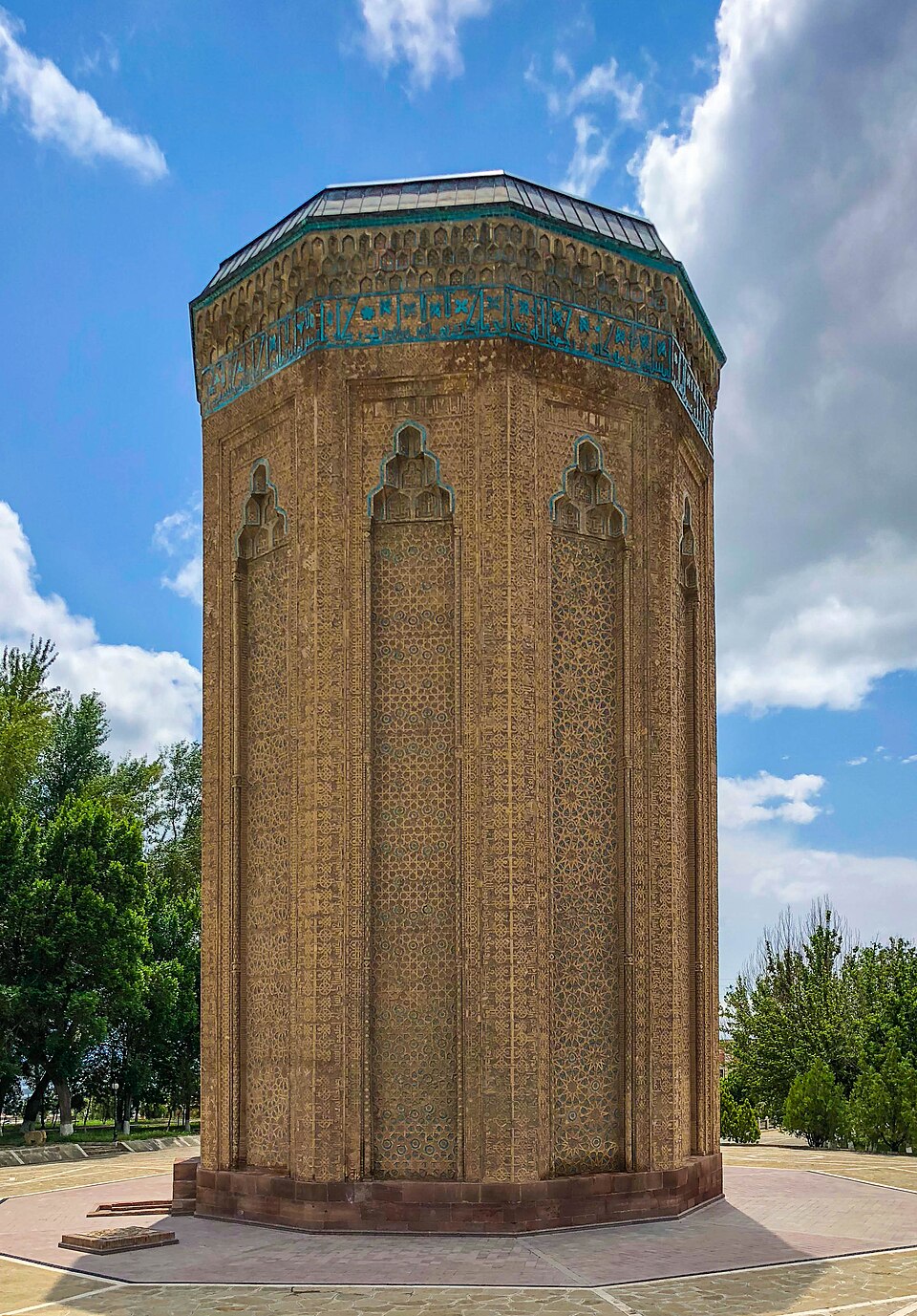
A twelfth-century tomb tower covered in turquoise-glazed geometric brickwork, a masterpiece of medieval Azerbaijani architecture.
About
The mausoleum is a ten-sided brick tower about 25 metres high, standing on a quiet plaza in the city of Nakhchivan. Each of its faces is covered in geometric patterns formed by bricks of different shades, with bands of Arabic script and turquoise-glazed tiles picking out the designs.
Beneath the tower is an underground burial chamber, and above it, a conical roof that rises like a pointed cap. Up close the detail is extraordinary, and in the evening light the brick glows a warm orange against the sky. The tower is a landmark of Nakhchivan and a strong example of the region’s medieval Islamic art.
History
The mausoleum was built in 1186 by the architect Ajami Nakhchivani for Momine Khatun, the wife of Shamsaddin Eldiguz’s son Jahan Pahlavan, whose Eldiguzid dynasty ruled much of Azerbaijan and northwestern Iran at that time. Ajami Nakhchivani founded a well-known school of architecture whose influence spread across the region, and his work includes other tombs and towers. The mausoleum was part of a larger funerary complex that no longer stands, and only the tower survives. Over the centuries it survived earthquakes, wars and changes of rule, and in the Soviet era it was protected as a monument. A major restoration programme followed in the twentieth century, and again after Azerbaijan regained independence in 1991. Because Nakhchivan is an exclave, separated from the rest of the country by Armenian territory, the tower is less often visited than monuments around Baku, yet it is one of the finest works of its period in the Islamic world.