Palace of the Shirvanshahs (Baku)
A fifteenth-century royal complex of courtyards, a mosque, a mausoleum and a bathhouse inside Baku’s walled Old City.
About
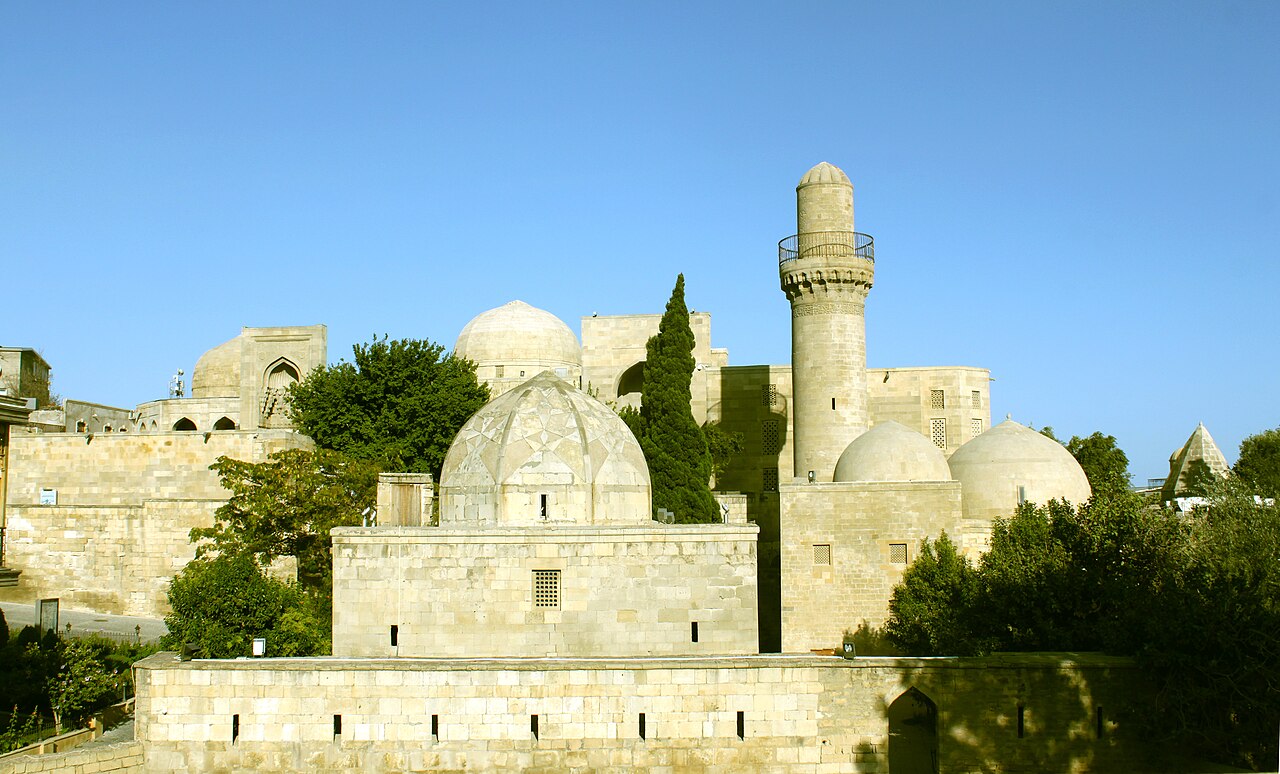
The palace sits on a terrace on the hillside of the Old City, built from pale local limestone. Instead of one grand building it is a group of quiet courtyards and halls, with carved stone doorways, arched windows and inscriptions in elegant Arabic script.
The main buildings include the palace itself, the Divankhana, a pavilion with an open-sided portico, the royal mausoleum, a mosque with a short minaret, and the remains of a bathhouse. Inside, rooms hold carpets, ceramics and carved stonework, and the quiet gardens are a calm pause from the busy lanes outside.
History
The Shirvanshahs, a dynasty that ruled the historic region of Shirvan for several centuries, moved their capital to Baku after an earthquake destroyed their older seat at Shamakhi. Most of the palace was built in the fifteenth century under the ruler Khalilullah I, with the royal mausoleum and mosque dating from the same period. Over time the palace passed through the hands of Safavid, Ottoman and Russian rulers, and the complex was damaged, notably in the Russian bombardment of 1806 and by later neglect. A long programme of restoration in the twentieth and twenty-first centuries returned many of its buildings to a visitable state, and the complex is now a museum. The Palace of the Shirvanshahs, together with the Maiden Tower and the Old City walls, was inscribed by UNESCO in 2000. The courtyard also holds the tomb of Seyid Yahya Bakuvi, a scholar the rulers honoured, and a small burial ground for the royal family.
UNESCO World Heritage: Inscribed 2000.