Alexander Nevsky Cathedral (Sofia)
A huge neo-Byzantine cathedral with gold-plated domes, one of the largest Orthodox cathedrals in the world.
About
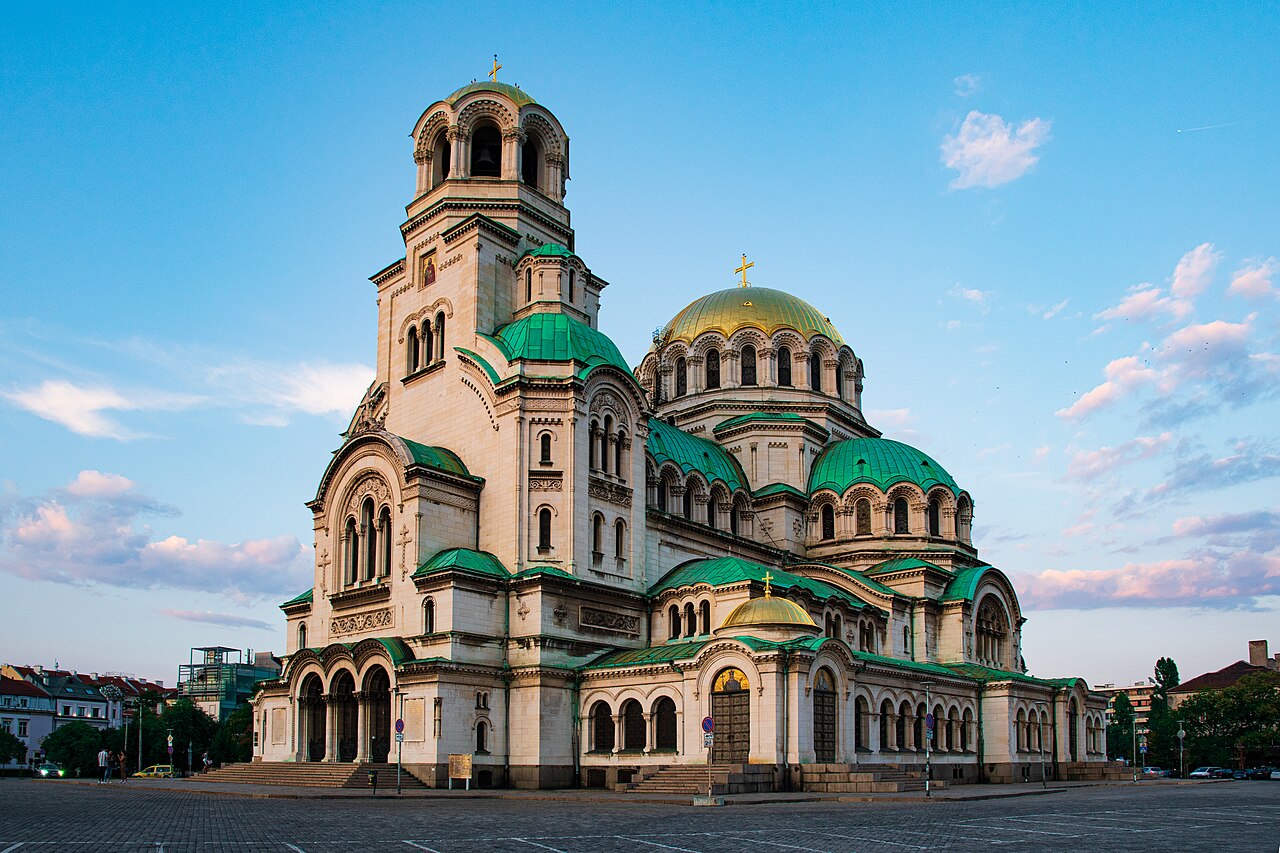
The cathedral dominates a square in the centre of Sofia, a great cross-shaped building of pale stone with a central dome of gold and green copper and a tall bell tower beside it. In sunshine the gilded domes can be seen from across the city.
Inside, a lofty interior is decorated with marble, onyx, painted scenes and a huge chandelier, and thousands can stand under the central dome. In the crypt, a museum of icons shows one of the best collections of Orthodox art in Bulgaria. Photography inside the church is limited, so check the signs.
History
The cathedral was built to honour the Russian soldiers who died in the Russo-Turkish war of 1877 and 1878, which led to the liberation of Bulgaria from Ottoman rule. It is named after Saint Alexander Nevsky, the patron saint of the Russian emperor Alexander II. The foundation stone was laid in 1882, and construction ran from 1904 to 1912, to a neo-Byzantine design by the Russian architect Alexander Pomerantsev. It was consecrated in 1924. Materials and artists came from several countries, and it has twelve bells, the largest weighing about twelve tonnes. With room for several thousand people, it is among the largest Orthodox cathedrals in the world and is one of Bulgaria’s main national symbols.