Old Nessebar
A small town on a Black Sea peninsula, packed with medieval churches. UNESCO-listed.
About
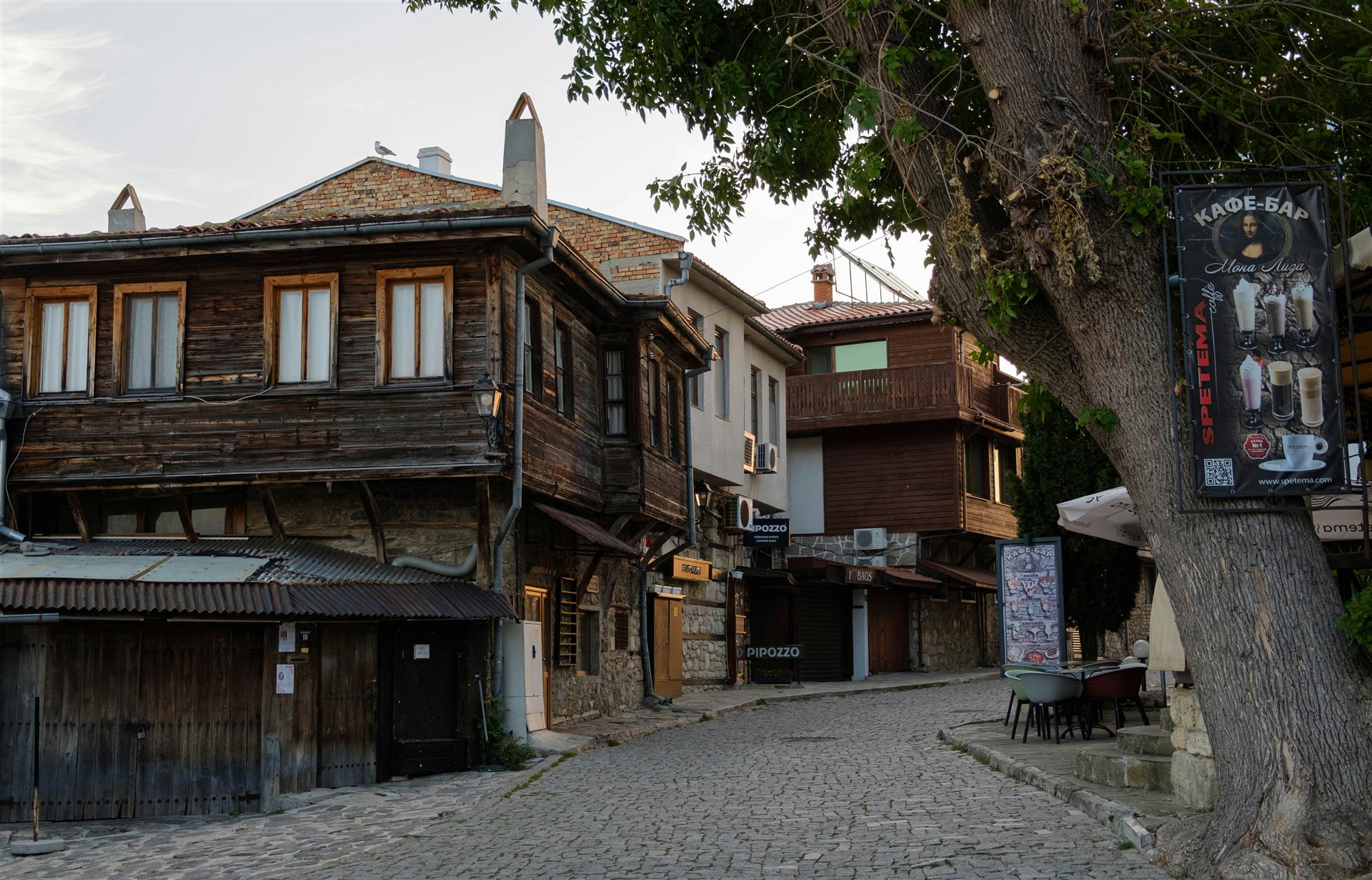
Old Nessebar sits on a rocky peninsula joined to the mainland by a narrow causeway, with white-washed walls, cobbled lanes and wooden houses with overhanging upper floors. Ruined and standing churches appear on almost every street, often with bands of brick and stone.
The best-known churches include Christ Pantocrator, with its patterned brickwork, and Saint Stephen, with preserved frescoes. A walk around the edge takes in old city walls, a little harbour and sea views, and the town can be seen in a morning or an afternoon.
History
Nessebar is one of the oldest towns on the Black Sea, with a history of around three thousand years. It began as a Thracian settlement, and around the sixth century BC Greek colonists from the area of Megara made it the trading town of Mesembria. It later passed to the Romans and Byzantines, and was fought over by the Bulgarian and Byzantine empires in the Middle Ages, changing hands several times. Most of the surviving churches were built between the fifth and the seventeenth centuries, and the town once had around forty. Nessebar declined under Ottoman rule but kept its character, and in 1983 the Ancient City of Nessebar was inscribed by UNESCO. Today it is a major tourist destination, close to the big resort of Sunny Beach, so summer weekends can be busy.
UNESCO World Heritage: Inscribed 1983.