Plovdiv Old Town and Roman Theatre
One of Europe’s oldest continuously inhabited cities, with colourful Revival-era houses and a well-preserved second-century Roman theatre.
About
Plovdiv’s old town climbs over three hills in the city centre. Its cobbled streets are lined with 19th-century merchants’ houses with overhanging upper floors, painted in deep reds, blues and yellows, many open as museums or galleries.
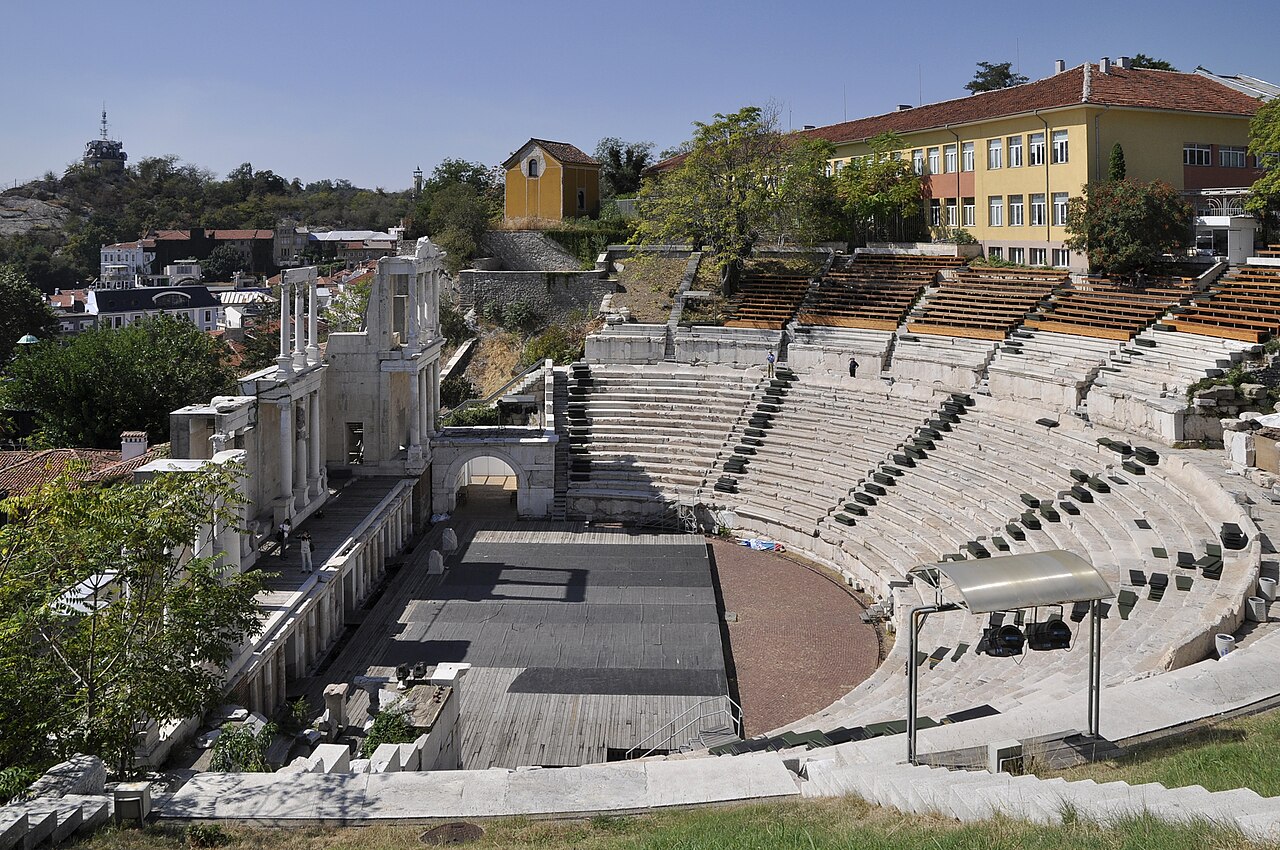
The Roman Theatre, built in the early second century, is set into the hillside above the town and still hosts concerts and performances, with a sweeping view of the city and the Rhodope Mountains. Remains of the Roman stadium lie below the main pedestrian street.
History
People have lived on the hills of Plovdiv for several thousand years, and traces of settlement here go back to the Neolithic period. The Thracians had a town here, and in 342 BC Philip II of Macedon, the father of Alexander the Great, took it and gave it his name, Philippopolis. Under the Romans in the early second century the city grew rich, and the theatre and stadium were built. It was later ruled by Byzantines, Bulgarians and, from the fourteenth century, the Ottomans. In the nineteenth century, wealthy local merchants built the Revival-style houses that give the old town its character, during a period of national cultural awakening. In 2019 Plovdiv was a European Capital of Culture, which brought new attention and restoration to the old town.