Curonian Spit
A narrow ribbon of sand dunes and pine forest between the Baltic Sea and a lagoon, shared with Lithuania.
About
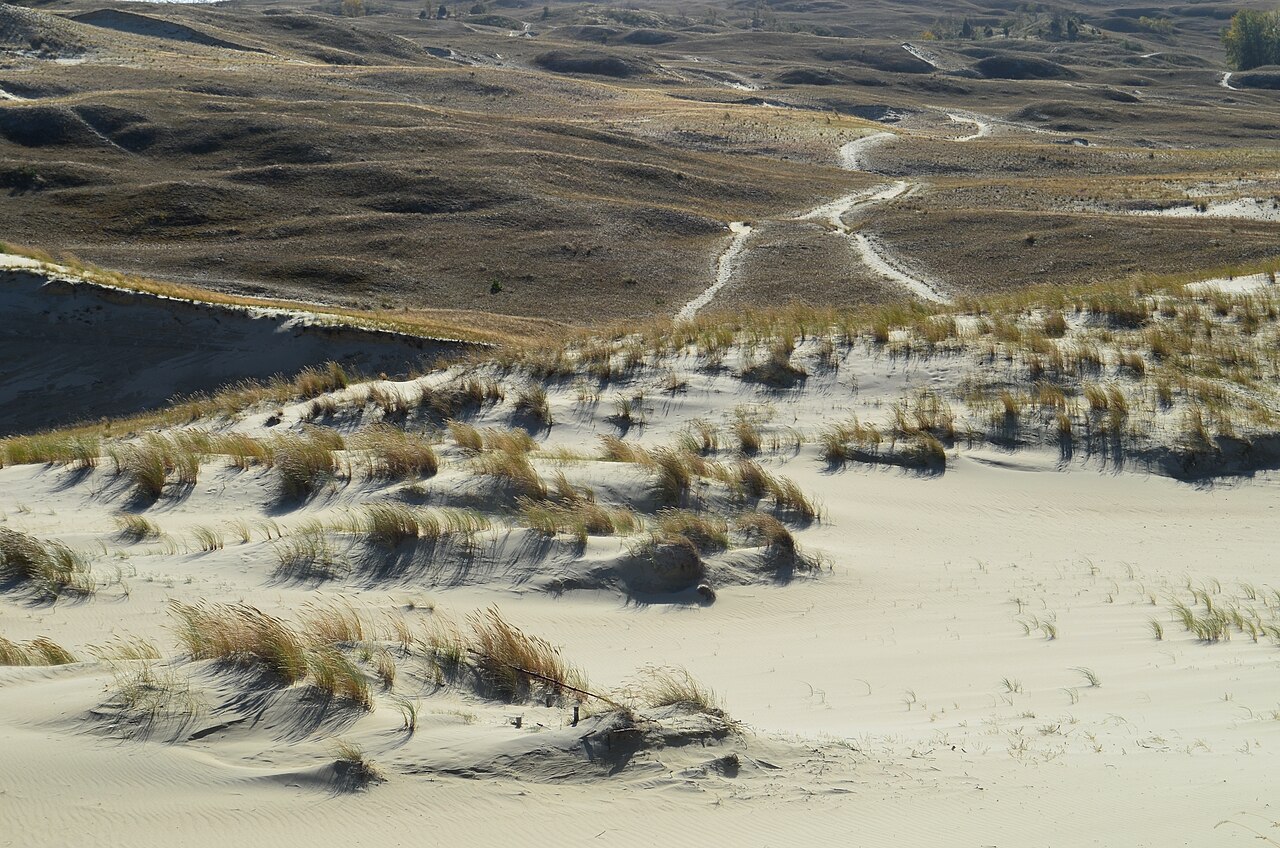
The Curonian Spit runs for nearly 100 kilometres, separating the open Baltic from the calm Curonian Lagoon. In places it is only a few hundred metres wide, with white dunes on one side and forest on the other.
On the Russian side, a national park protects the dunes, a so-called 'dancing forest' of twisted pines and long beaches. There are marked walking trails and viewpoints over both sea and lagoon.
Bring layers; the sea breeze can be strong. Entry to the national park carries a small fee.
History
The spit has been shaped by wind and sand for thousands of years. Villages here have been buried by moving dunes, and forest planting helped hold the dunes in place. UNESCO listed the shared Russian and Lithuanian site in 2000. In the nineteenth century a large tree-planting programme began to stop the moving dunes, and the highest dune, Efa, is named after the engineer who led it. A bird observatory founded in 1901 at Rybachy, on the Russian side, became one of the best known in the world for studying migrating birds. The Russian national park was established in 1987.
UNESCO World Heritage: Inscribed 2000.