Hermitage Museum
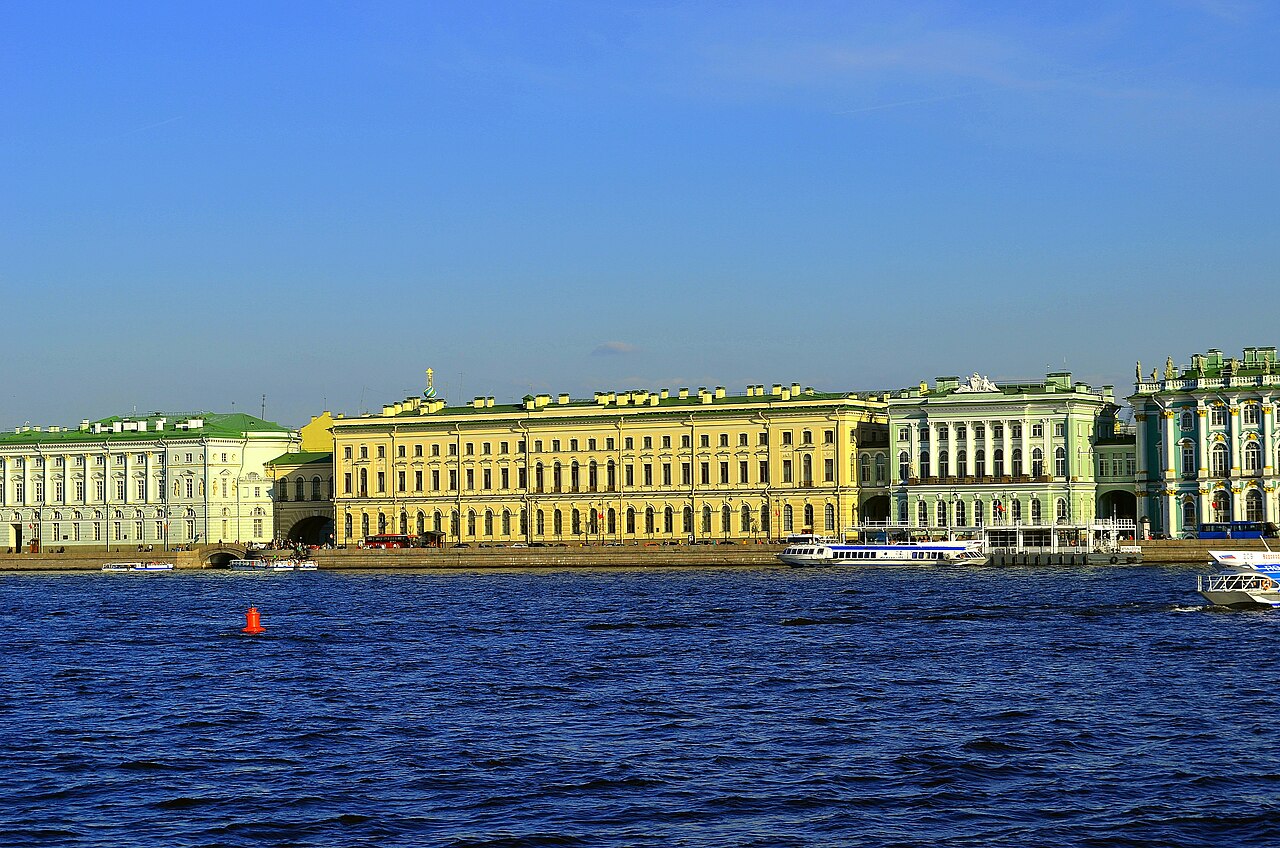
A green-and-white palace on the Neva holding millions of objects, with state rooms as impressive as the art.
About
The Hermitage fills the Winter Palace and several neighbouring buildings along the river. The collection runs from ancient Egyptian and classical antiquities to Old Masters, with notable Dutch, Italian and French painting and a large selection of modern art in the General Staff Building across the square.
The interiors are a main attraction in their own right: the Jordan Staircase, the golden Peacock Clock in the Pavilion Hall and the vast ceremonial halls. Nobody sees everything; choose two or three themes and enjoy the rest as you walk.
Allow a full day, or split it into two shorter visits. Arrive when it opens and head to the upper floors first.
History
The museum traces its origin to a private collection acquired by Catherine the Great in the 1760s. The Winter Palace itself was completed in the middle of that century as the residence of the Russian emperors. It opened to the public in the nineteenth century and expanded steadily afterwards. The Winter Palace was designed by Bartolomeo Rastrelli and completed in the early 1760s. A great fire in 1837 destroyed much of the interior, which was rebuilt within about two years. During the Second World War a large part of the collection was evacuated to the Urals before the siege of Leningrad began.
UNESCO World Heritage: Inscribed 1990.