The Moscow Kremlin
A walled fortress of cathedrals, towers and treasuries on the bank of the Moskva River.
About
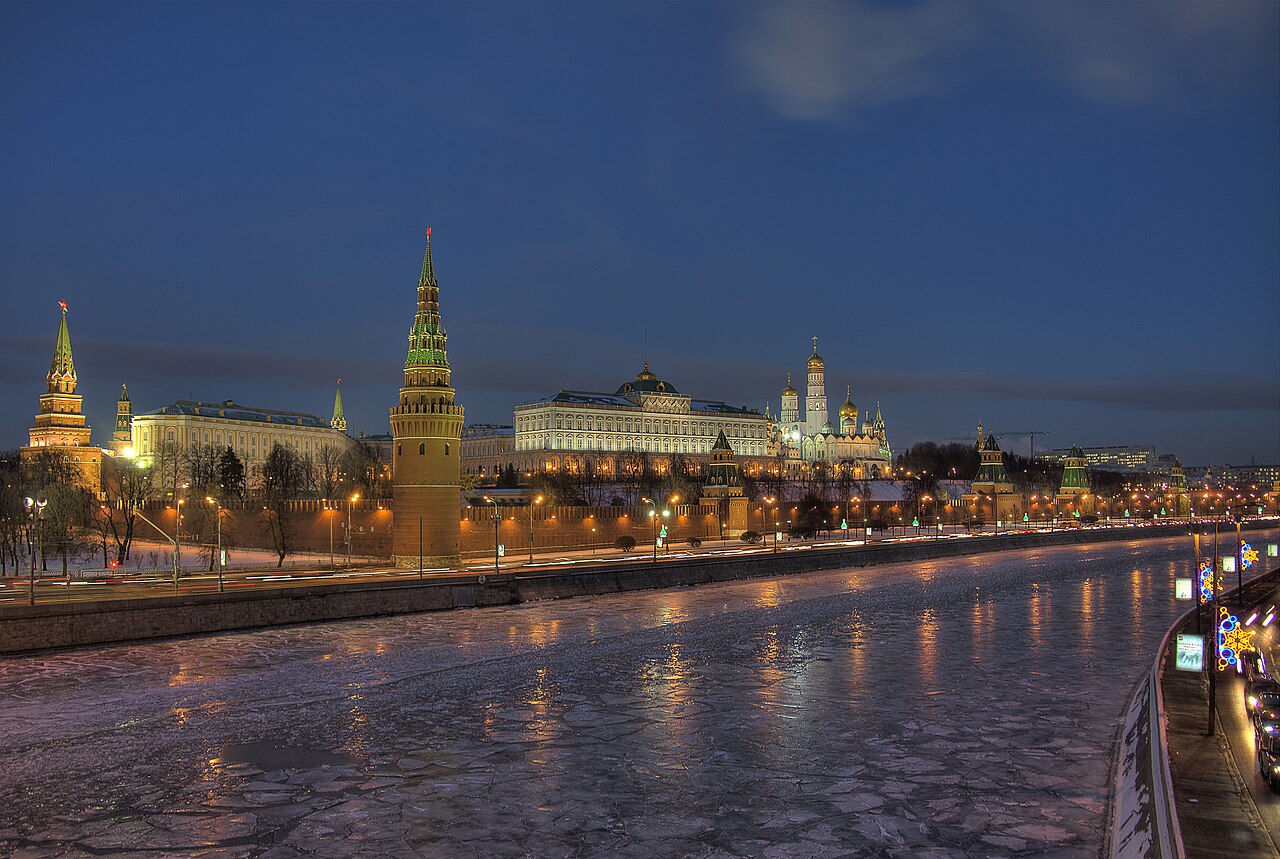
'Kremlin' simply means citadel, and Moscow's is the original. A triangle of red-brick walls, broken by twenty towers, encloses palaces, an arsenal and a cluster of golden-domed cathedrals around Cathedral Square.
Inside the Cathedral Square, the Dormition, Annunciation and Archangel cathedrals are filled with icons and tombs. Nearby, the Armoury Chamber holds royal regalia, carriages and jewelled objects, while the Tsar Bell and Tsar Cannon sit in the open air, famously never used for their intended purpose.
Parts of the complex are working government buildings and are closed to visitors, so plan around the open zones.
History
A wooden fort stood here in the twelfth century. The present walls were raised in the late fifteenth century under Ivan III, with help from Italian architects. For centuries it was the seat of the grand princes and tsars, and again became the seat of government after 1918. The Dormition Cathedral, built in the 1470s by an Italian architect, was the church where the tsars were crowned, the last time in 1896. Even after the court moved to St. Petersburg in the early 1700s, the Kremlin kept this ceremonial role. Many of its buildings were restored during the twentieth century.
UNESCO World Heritage: Inscribed 1990.