Suzdal
A small riverside town of white-stone churches, wooden houses and monasteries, best explored on foot.
About
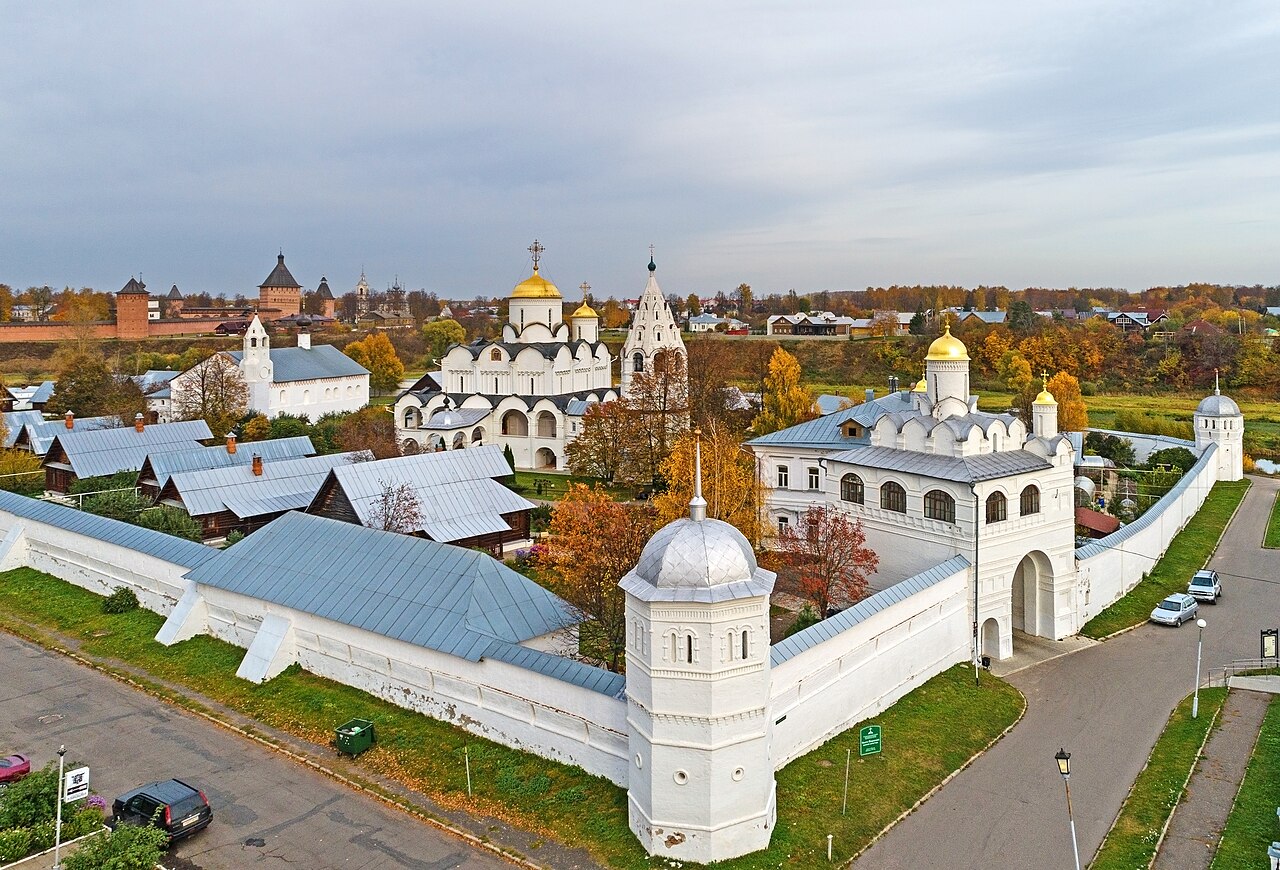
Suzdal has barely changed in scale for centuries. A few streets, dozens of churches, a kremlin on a bend of the Kamenka River and low wooden houses with painted shutters give it the calm of a village.
Highlights include the Nativity Cathedral with its blue, star-spangled domes, the monastery of the Saviour and St. Euthymius with its fortress-like walls, and an open-air museum of wooden architecture on the edge of town.
It is also known for honey mead, pickles and a summer cucumber festival; local guesthouses are the best way to enjoy the town.
History
One of the oldest towns in Russia, Suzdal was a centre of the medieval principality before Moscow rose. It later became a place of monasteries and merchants, and escaped heavy industry, which helped preserve the old centre. The 'white monuments' of Vladimir and Suzdal were listed by UNESCO in 1992. The first written mention of Suzdal dates to 1024. The town was sacked during the Mongol invasion of 1238 but recovered, and from the sixteenth century it flourished with monasteries and merchants' churches. In the nineteenth century the railway bypassed the town, which helped it keep its old appearance.
UNESCO World Heritage: Inscribed 1992.