Haghpat and Sanahin Monasteries
Two medieval monastic complexes in the northern Lori region, together a UNESCO World Heritage site.
About
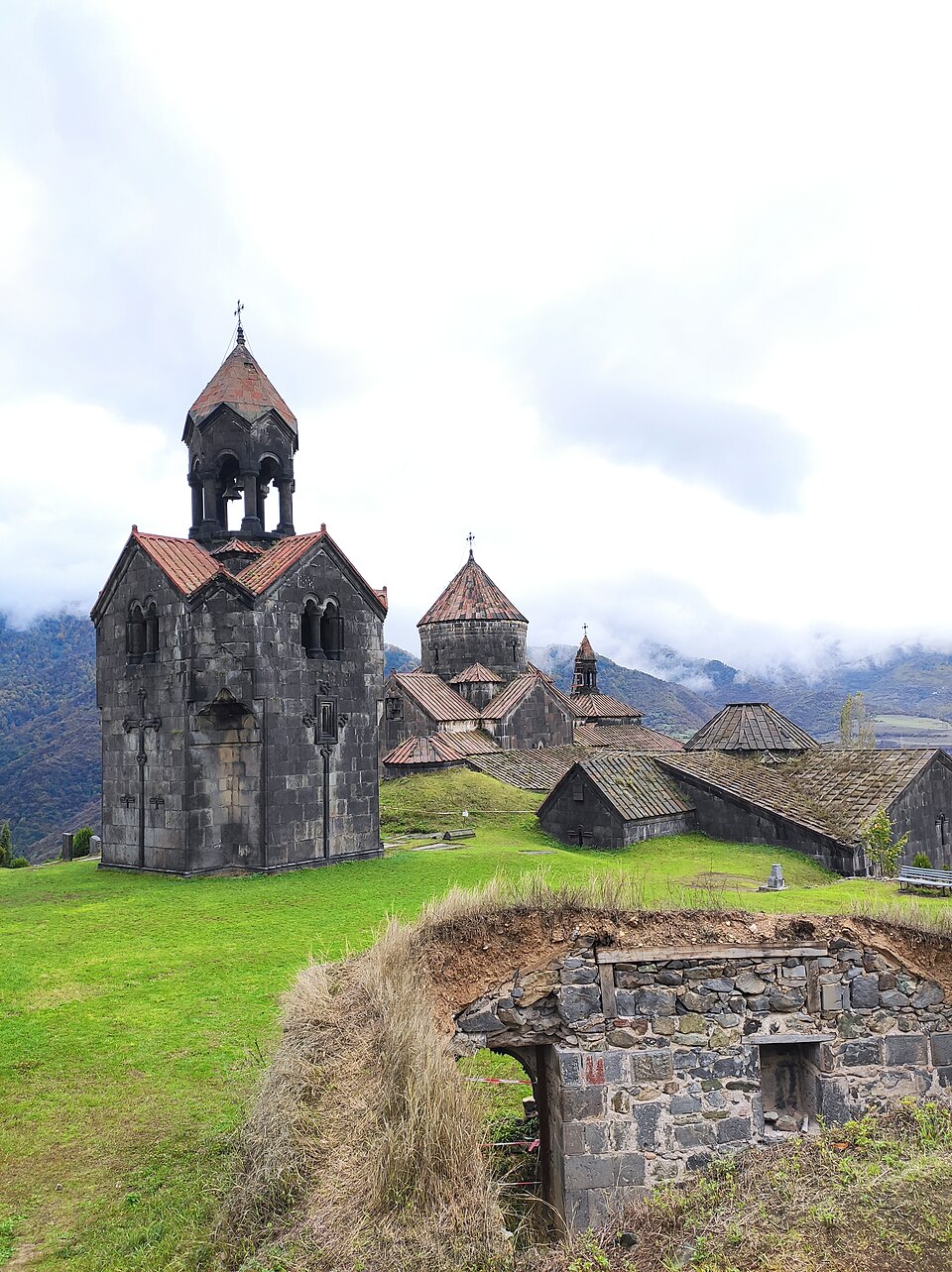
Haghpat and Sanahin sit on opposite sides of the Debed river canyon, in forested hills above the town of Alaverdi. Both are built of dark grey basalt, with heavy walls, domed churches and covered halls known as gavits.
Haghpat has a bell tower, a library and a fine view over the valley, while Sanahin has a large collection of khachkars and a lively, atmospheric courtyard. The two can be visited on the same day, and each takes an hour or so.
History
Both monasteries were founded in the tenth century under the Bagratid kings, when the dynasty ruled Armenia from its capital at Ani, and they grew into important centres of learning, with scriptoria and schools. Sanahin, whose name is said to mean this one is older than that one, was a renowned school of manuscript illumination, and its library held many works. Haghpat was founded in 976 and expanded over the following centuries, with the main church of Saint Nshan, a bell tower from 1245 and a refectory. The monasteries survived invasions by Seljuks, Mongols and Persians, and in the Soviet period they were used as museums and restored. Together they were inscribed by UNESCO in 1996 as the Monasteries of Haghpat and Sanahin, and the site was extended in 2000. Sanahin is also the birthplace of the Mikoyan brothers, one of whom led Soviet politics and the other co-designed the MiG fighter aircraft, and a small museum nearby is dedicated to them.
UNESCO World Heritage: Inscribed 1996.