Tsitsernakaberd (Armenian Genocide Memorial), Yerevan
A hilltop memorial with an eternal flame and a museum commemorating the victims of 1915.
About
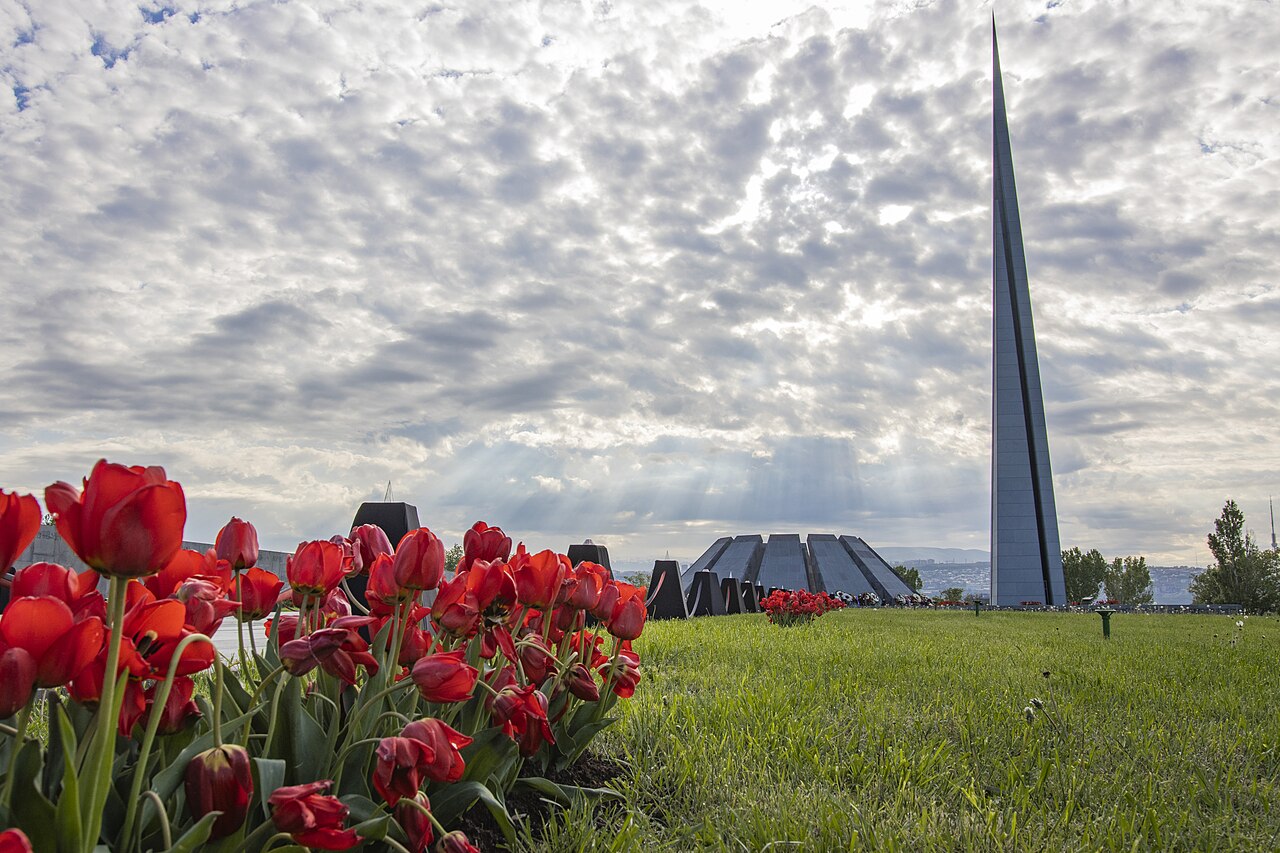
The memorial stands on a hill above the city and consists of a circle of twelve slanted basalt slabs around an eternal flame, with a tall, thin stele rising beside them. Visitors walk down a long, quiet path and lay flowers at the flame.
The nearby museum-institute presents documents, photographs and testimonies about the mass killings and deportations of Armenians in the Ottoman Empire beginning in 1915. It is a solemn, moving place; allow time, dress respectfully and keep voices low.
History
The memorial was built in 1967 to mark the fiftieth anniversary of the events of 1915, when hundreds of thousands of Armenians were killed or died in deportations from the Ottoman Empire. It was designed by the architects Arthur Tarkhanyan and Sashur Kalashyan, and followed large demonstrations in Yerevan in 1965 demanding public recognition. The twelve slabs are often said to represent the twelve lost provinces of historic Armenia, and the 44-metre stele, called the Reborn Armenia, symbolises the survival and renewal of the nation. The Armenian Genocide Museum was opened in 1995 and the site has been extended in later years. Armenia, and many other countries and scholars, recognise these events as genocide, while the Turkish government rejects that term. Each year on 24 April, hundreds of thousands of people walk up to the hilltop to lay flowers by the flame.