Gelati Monastery (near Kutaisi)
A twelfth-century monastery and academy founded by King David the Builder, known for its golden-age mosaics and frescoes.
About
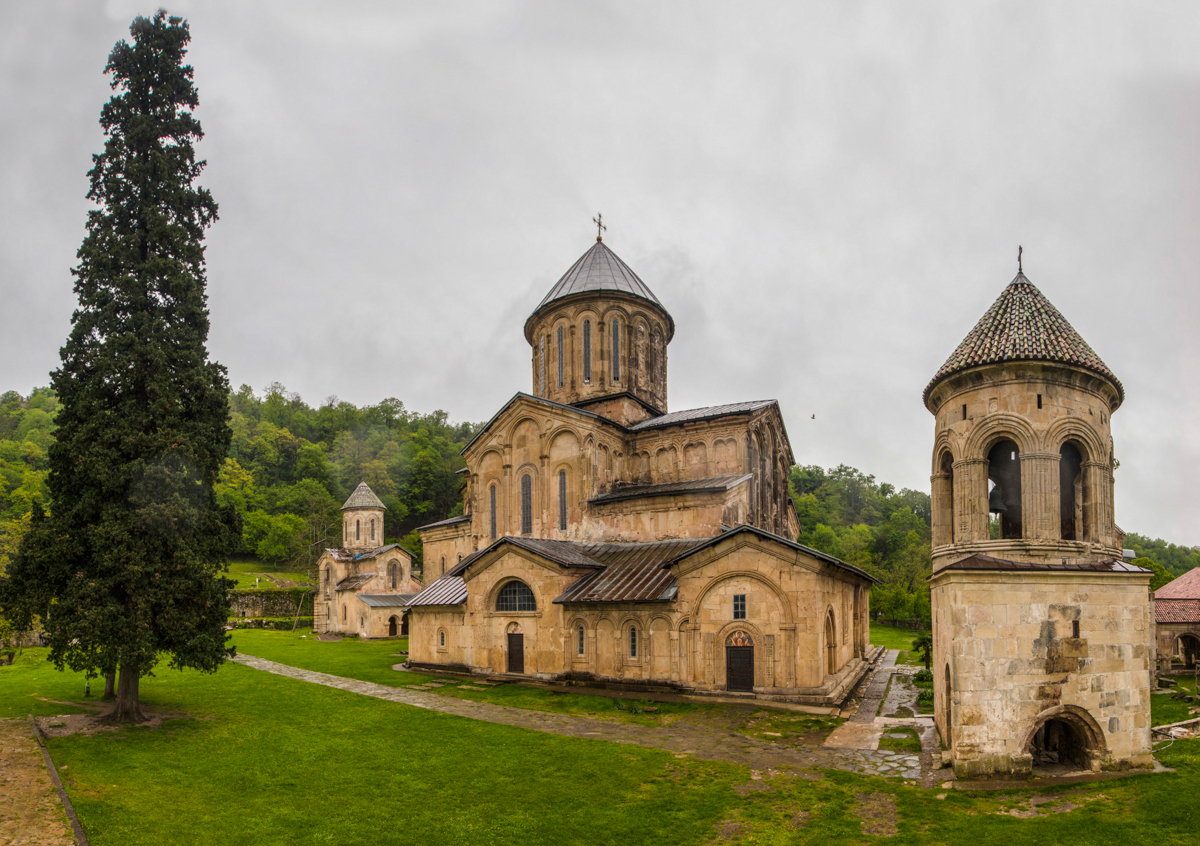
Gelati sits on a wooded hillside above Kutaisi, a cluster of stone churches, a bell tower and academy buildings behind a quiet courtyard. The main church holds a large mosaic of the Virgin and Child in its apse, rare in Georgia, and later wall paintings cover many interior surfaces.
The monastery was also a centre of learning, with a school that attracted scholars and translators. King David the Builder is buried at the entrance gate, at his own request, so that all who pass would walk over his grave.
History
King David IV, known as the Builder, founded the monastery in 1106 during Georgia's golden age. It became a spiritual and intellectual centre of the kingdom. Gelati was inscribed by UNESCO in 1994, and has been the subject of conservation concerns in recent years. The monastery's academy attracted leading thinkers of the age, among them the philosopher Ioane Petritsi, who taught and translated here. David the Builder was buried at the gate and his tomb is still a place of respect. In 1510 Ottoman forces sacked the monastery, and it was later restored.
UNESCO World Heritage: Inscribed 1994.