Narikala Fortress (Tbilisi)
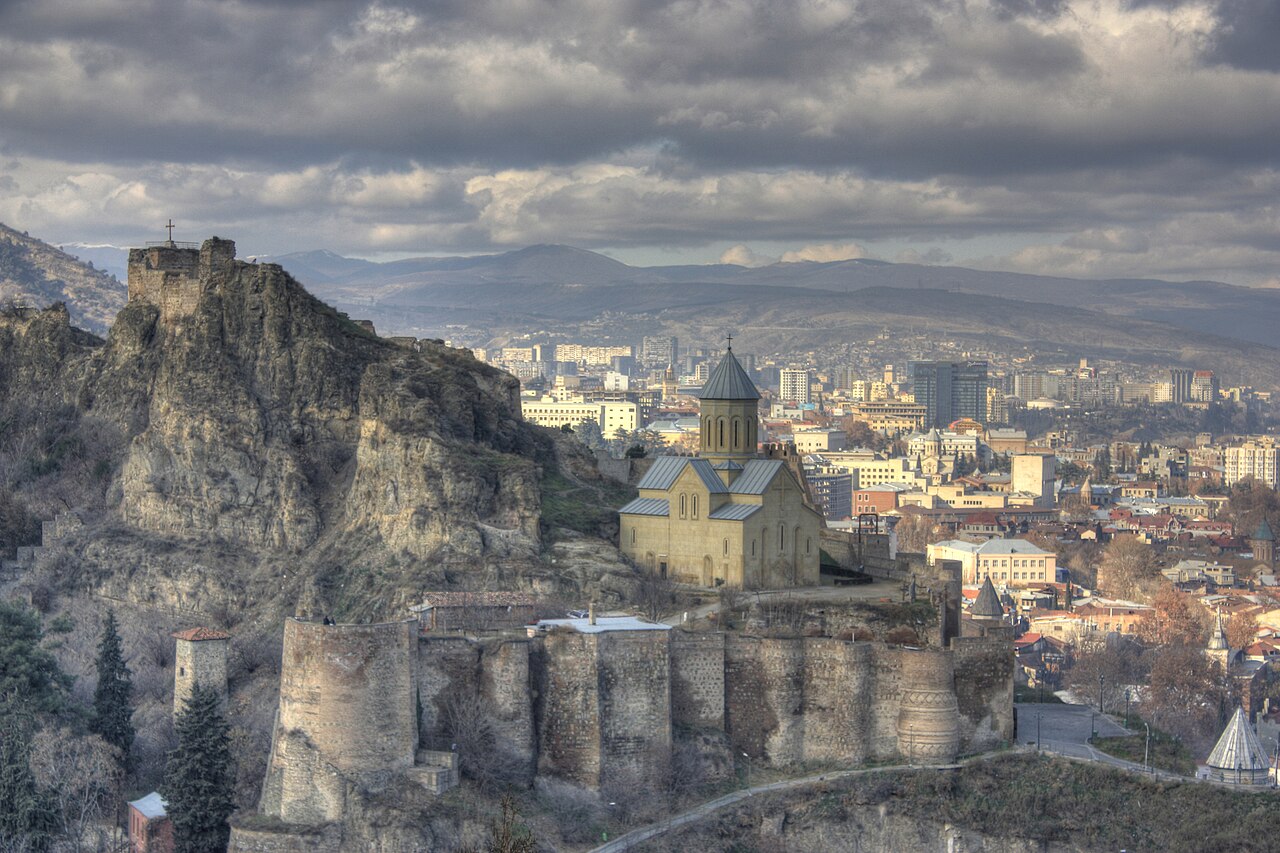
An ancient hilltop citadel above the old town, reached by cable car, with sweeping views over Tbilisi.
About
Narikala crowns the ridge above the old town, its stone walls and towers following the line of the hill. Inside the walls, a small restored church sits among the ruins, and the paths around it open onto roofs, domes and the Mtkvari river far below.
Most visitors arrive by cable car from the riverside park, or walk up through the old quarter. Next to it, on the neighbouring ridge, the tall statue known as Mother of Georgia looks over the city. Sunset is a favourite time to come.
History
A fortress has stood here since the early centuries of the city's history and was extended by later rulers over the Middle Ages. Much of it was badly damaged by an earthquake in the nineteenth century, and the church inside was rebuilt in the late twentieth century. The name Narikala is usually linked to a Persian or Mongol phrase meaning little fortress. Arab emirs held Tbilisi for several centuries, and the citadel passed to the Georgian crown when King David the Builder took the city in 1122. After that it served as a royal fortress and refuge for the city's rulers.