Uplistsikhe
An ancient rock-hewn town near Gori, with halls, streets and a theatre cut into the cliff.
About
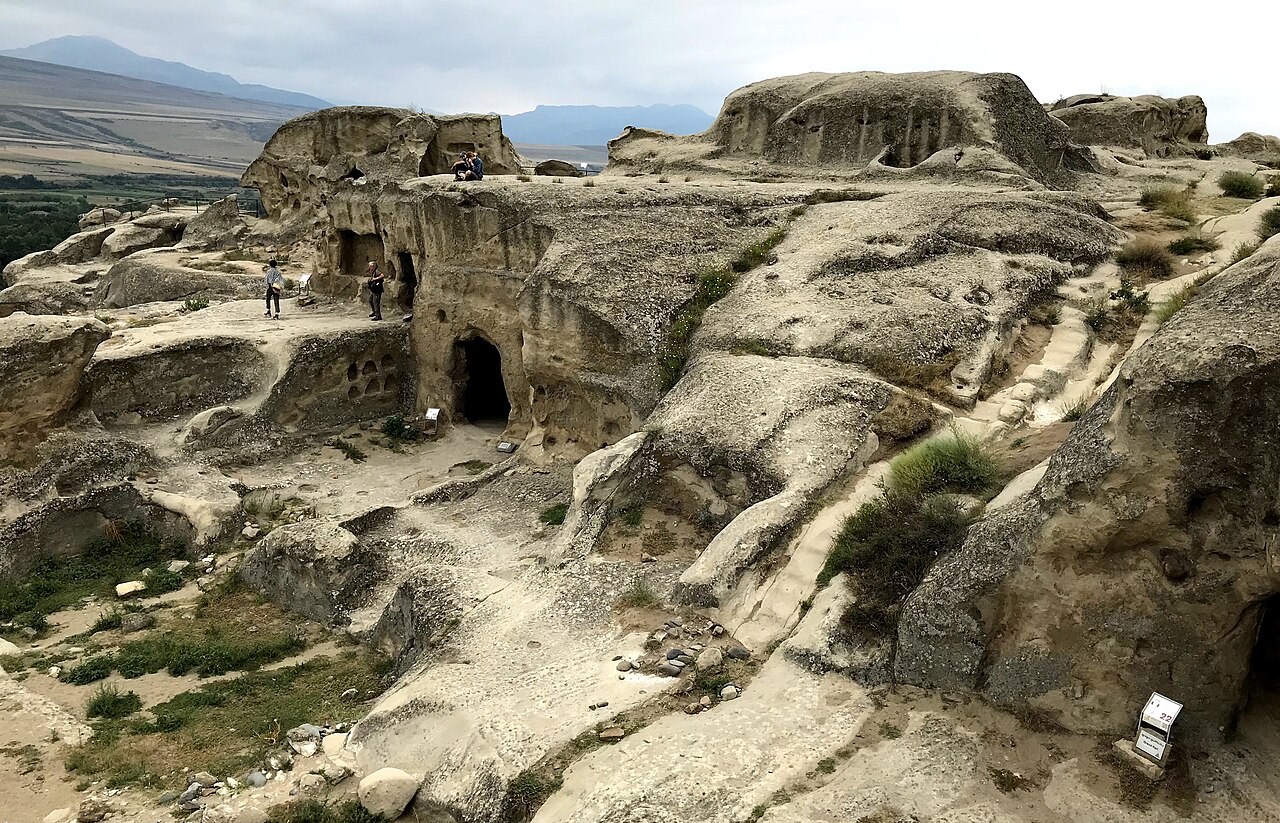
Uplistsikhe spreads across a sandstone ridge above the Mtkvari river. Rock-cut rooms, stepped streets, a large hall with a carved ceiling, and a space often called the theatre are all hewn directly from the stone, with a small medieval church standing at the centre.
Walking the ridge is like walking through a town with the roofs removed, and the views over the river valley are wide and open. The rock can be slippery, so wear sturdy shoes and allow at least an hour.
History
People have lived here since the early Iron Age, and the town grew into an important centre of pagan worship and trade on routes through the region. It declined after Christianity spread and was badly damaged by the Mongol invasions of the thirteenth century. The name means the Lord's fortress. The town had temples, a hall, and storage and workshop spaces, and a small basilica was built at its centre in the ninth or tenth century, showing how an older pagan site was adapted to Christian use. Mongol raids in the thirteenth century ended its importance, after which it was largely abandoned.