Bozjyra (Mangystau region)
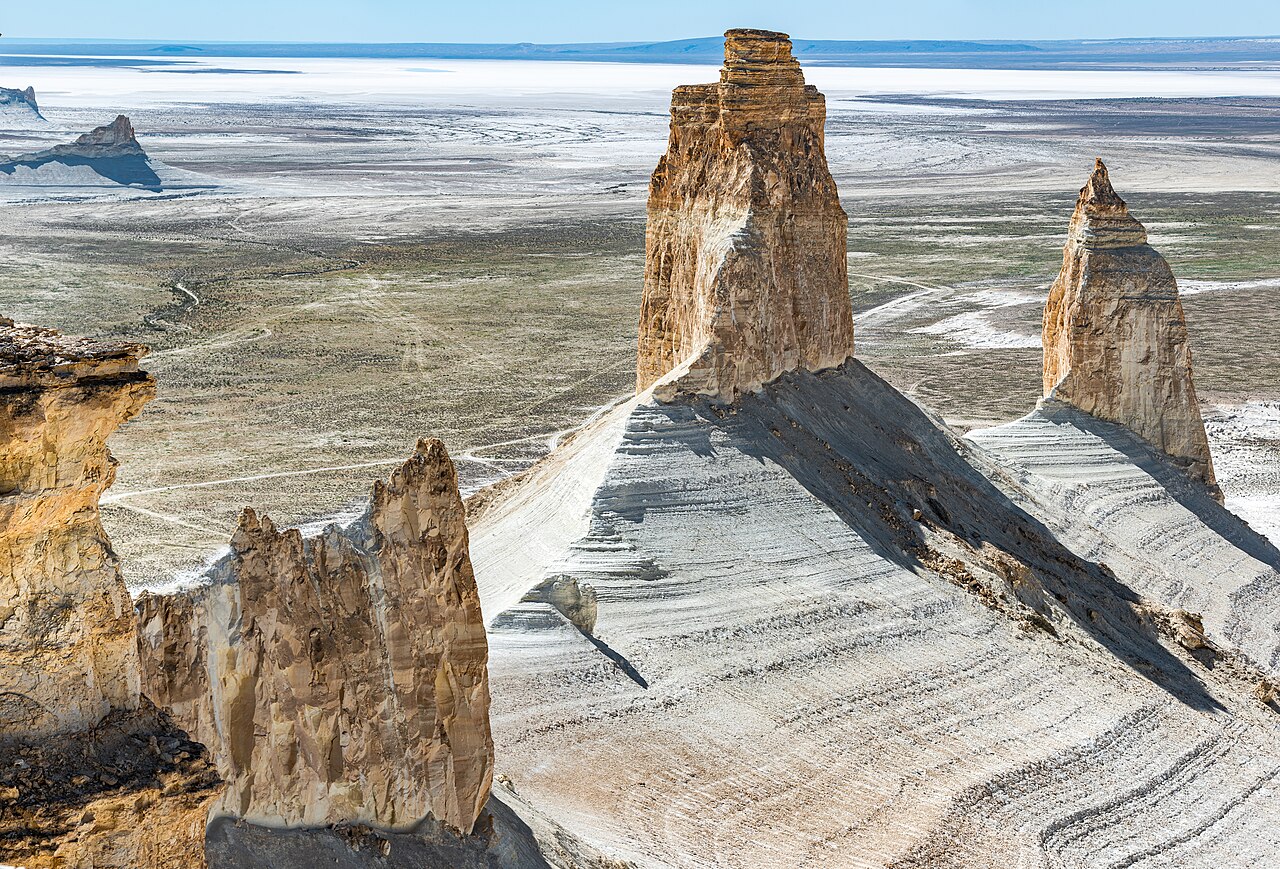
A surreal landscape of white chalk cliffs and pinnacles rising from the dried seabed of an ancient ocean.
About
Bozjyra is a wide basin on the Ustyurt plateau, rimmed by high chalk cliffs and filled with eroded white and pale pink pinnacles, among them two large peaks known as the Fangs. The ground is dry and cracked, and the landscape looks like a lunar scene.
The best light is at sunrise and sunset, when the chalk turns gold and pink. Most visitors camp overnight in tents or yurts nearby, with a starry sky, as there are no hotels in the area.
History
The Mangystau region and the Ustyurt plateau were once covered by an ancient sea, part of a great ocean sometimes called the Tethys, and the white and pink cliffs of Bozjyra are formed of layers of chalk and marl laid down on its floor tens of millions of years ago. When the sea retreated, wind, rain and temperature swings slowly carved the rock into the fangs, ridges and pinnacles seen today. Fossils of marine creatures, such as shells and the teeth of ancient sharks, can still be found in the area. The name Bozjyra is often translated as grey ravine or something similar, from the colour of the cliffs. For centuries the area was visited mainly by nomadic herders and caravans crossing the dry plateau. In the last two decades, improved roads and tourism have made it much easier to reach, and it has become the best-known natural landmark in western Kazakhstan.