Palace of Peace and Reconciliation (Astana)
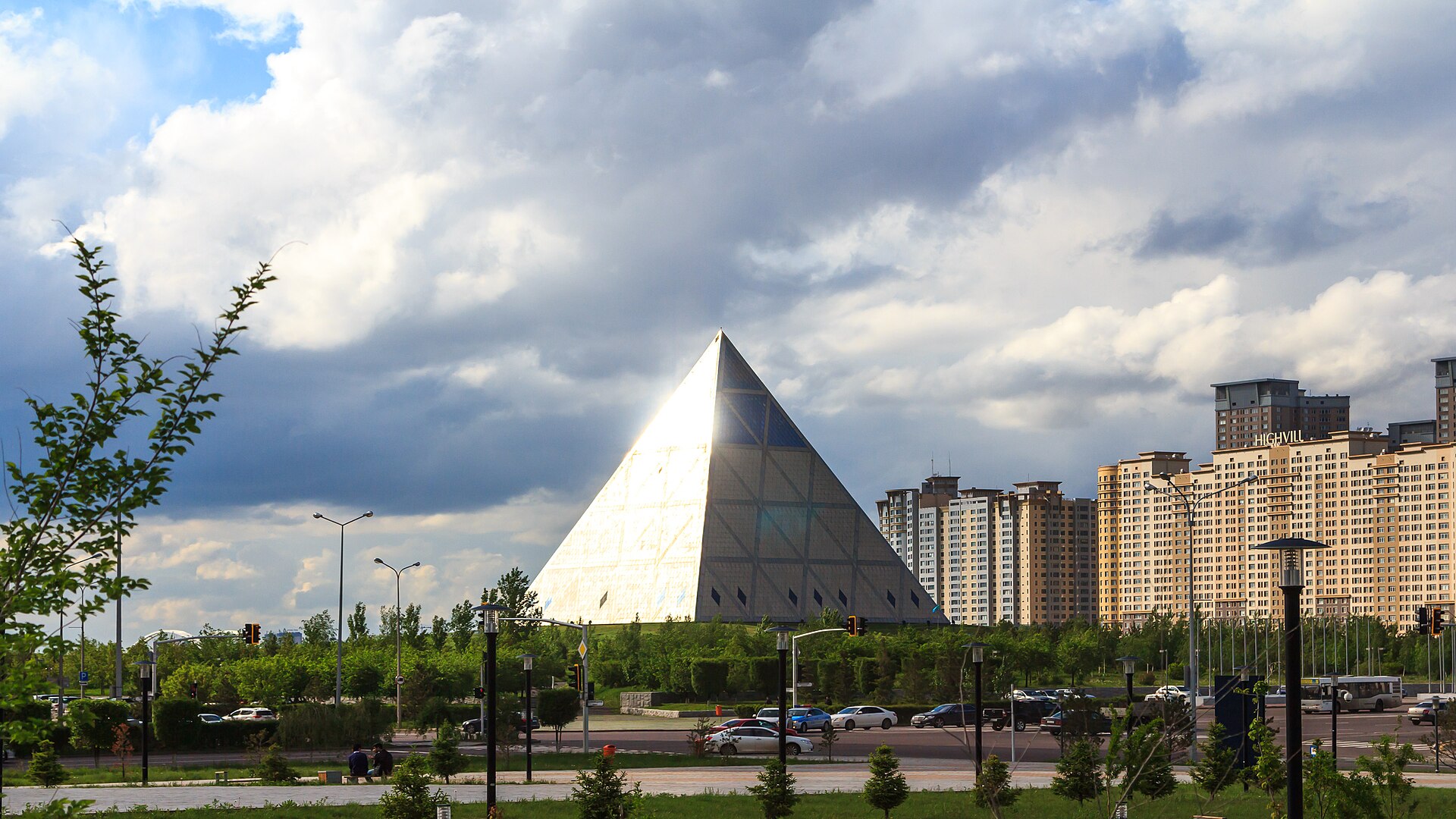
A glass pyramid, also by Norman Foster, built to host interfaith congresses.
About
The Palace is a 62-metre pyramid of glass and pale stone, standing on a landscaped square on the east side of Astana. Its sharp shape and plain geometry make it one of the capital’s most recognisable buildings.
Inside is a large opera hall, a museum of culture and a hall at the top under a coloured glass dome, where world religious leaders meet. It is best known as a venue and for its architecture, so visit for a look and a photo.
History
The building was designed by Norman Foster and opened in 2006, built at the initiative of the first president of Kazakhstan as a place for dialogue between faiths and cultures. The pyramid form was chosen as a universal shape linked to many ancient traditions, and its apex is topped with stained glass by the British artist Brian Clarke showing doves. The palace hosts the Congress of Leaders of World and Traditional Religions, which has been held every three years since 2003, bringing together representatives of Islam, Christianity, Judaism, Buddhism and other faiths. Besides the congress hall, it houses a 1,500-seat opera hall and an exhibition space. The building’s surface is made of glass panels and granite and is meant to reflect Kazakhstan’s image as a country that sits between East and West. It is also an example of how the new capital used high-profile international architects.