Tamgaly Petroglyphs
Thousands of Bronze Age rock carvings, including sun-headed figures. UNESCO-listed.
About
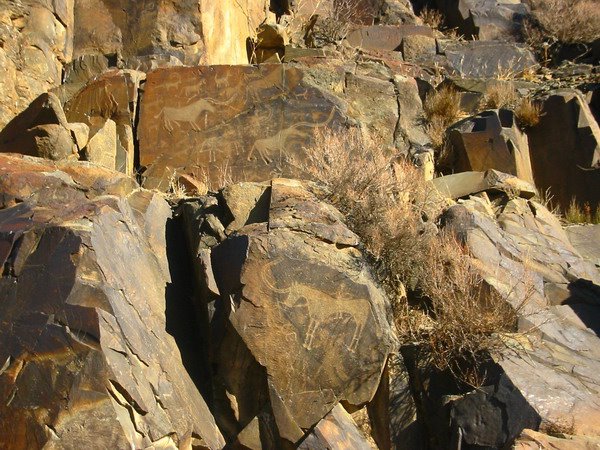
Tamgaly lies in a quiet, dry gorge in the Chu-Ili mountains, where dark rocks are covered with carved figures of animals, people and scenes of hunting and ritual. Over 5,000 carvings are spread across several groups.
The most striking images are of figures with radiating heads, thought to represent sun deities, and of dancers and oxen. A guide can lead you to the best panels, and the site also includes ancient burial mounds and settlements.
History
The petroglyphs date mainly from the second millennium BC, in the Bronze Age, with further carvings added in later periods, down to the early Iron Age and even the medieval era. The sun-headed figures and ritual scenes suggest that Tamgaly was a sacred place where communities of herders gathered. The name means marked place or place of signs in Turkic languages. Archaeologists have also found around 100 settlements and burial grounds in the surrounding area, showing a long period of habitation. The site was rediscovered by Russian explorers in the nineteenth century and studied in more depth in the twentieth century. In 2004 it was inscribed by UNESCO as the Petroglyphs within the Archaeological Landscape of Tamgaly, and it is protected as a state reserve. A modest visitor centre and a ranger service help look after it.
UNESCO World Heritage: Inscribed 2004.