Sulaiman-Too (Osh)
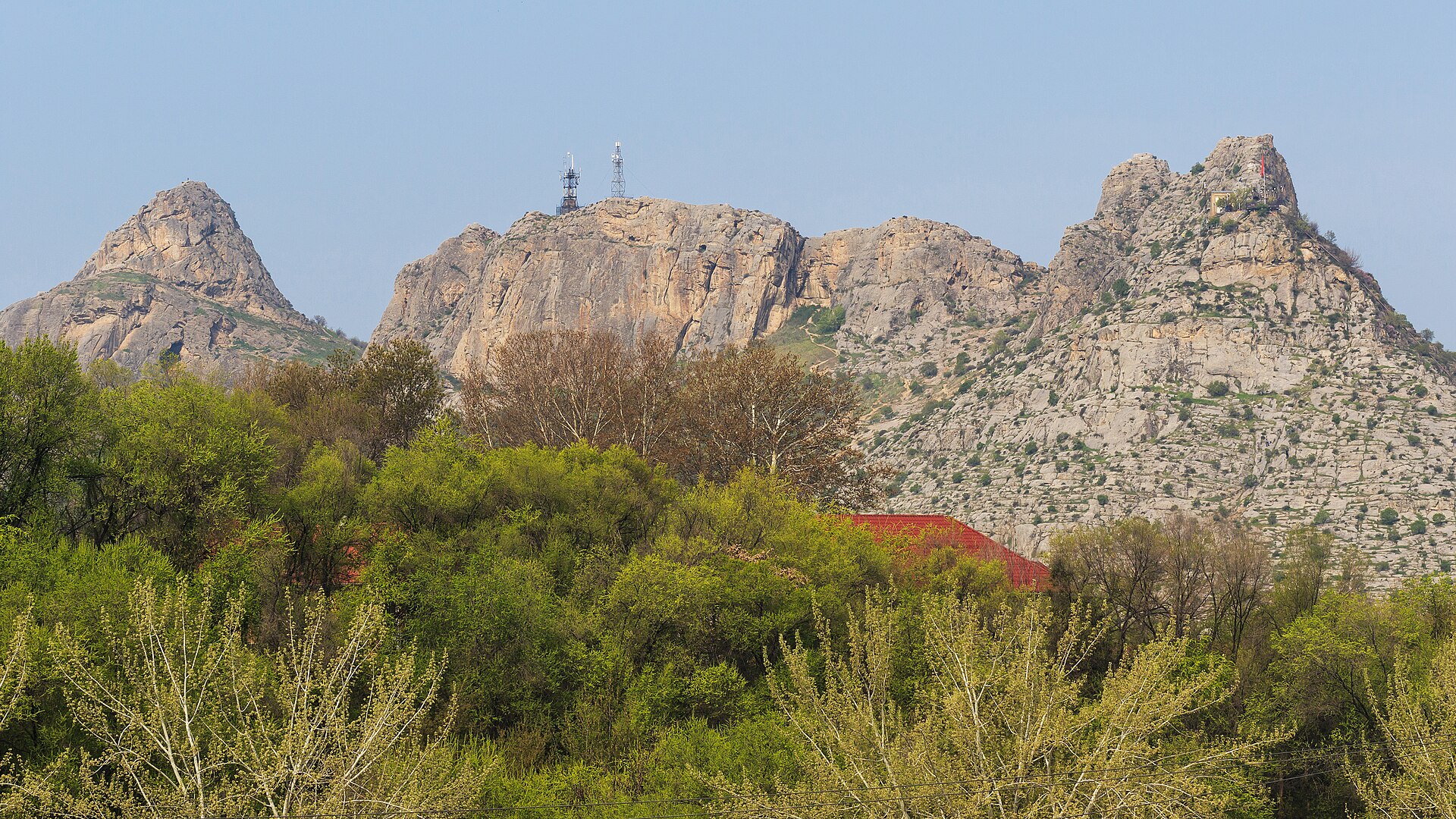
A sacred mountain rising over the city of Osh, a pilgrimage site for many centuries and Kyrgyzstan’s first UNESCO World Heritage site.
About
Sulaiman-Too is a rocky ridge with five peaks that rises abruptly out of the flat Fergana valley, right beside the city centre. Paths and steps climb its slopes past small shrines, caves and carved or painted rocks, with the city and the plain spread out below.
A museum built into a cave, a small mosque attributed to the Mughal emperor Babur and an old cave with healing associations are among the stops. The climb to the main summit takes about 40 minutes, and pilgrims come to touch the stones and pray.
History
For centuries, Sulaiman-Too has been a sacred mountain, the focus of beliefs from before Islam as well as of Muslim pilgrimage, and its name refers to the prophet Sulaiman, or Solomon. Archaeologists have recorded more than a hundred petroglyphs and a large number of sites linked to rites and healing, spread across its slopes. In the early sixteenth century, Babur, the future founder of the Mughal dynasty in India, is said to have built a small stone prayer house on one of the peaks, and a restored building marks the spot. The Soviet authorities discouraged religious practice, but pilgrimage to the mountain continued, and the cave museum was opened in 1978. In 2009 the mountain was inscribed by UNESCO as the Sulaiman-Too Sacred Mountain, the first World Heritage site in Kyrgyzstan, described as perhaps the most complete example of a sacred mountain worshipped over a long period of time. Osh itself is often described as one of the oldest cities in Central Asia, and a Silk Road trading centre.
UNESCO World Heritage: Inscribed 2009.