Danube Delta
One of Europe’s largest wetlands and a UNESCO biosphere reserve, rich in birdlife.
About
Where the Danube reaches the Black Sea, the river splits into three main channels and a maze of canals, lakes, reed beds and sandbanks. Much of the area is only reachable by boat, and tiny villages of low houses sit on the banks.
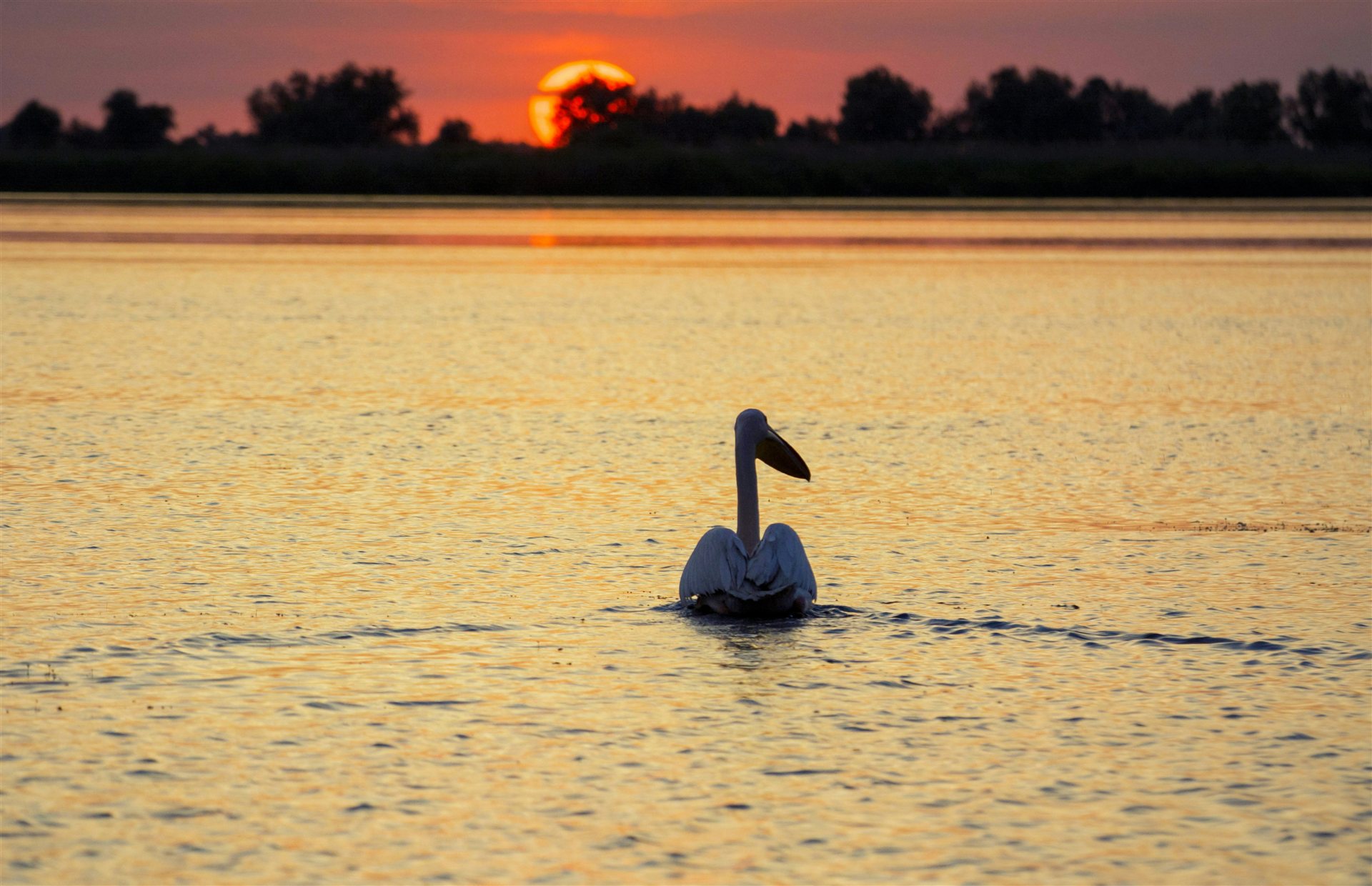
More than 300 bird species have been recorded, including great white and Dalmatian pelicans, spoonbills and egrets, and the water lily fields and old oak forests are home to fish and mammals. Visitors travel by small boat from Tulcea, stay in village guesthouses and spend days on the water.
History
The delta is a young landscape, still growing as the Danube drops its silt into the sea, and it covers around 4,000 to 5,000 square kilometres, mostly in Romania with a small part in Ukraine. People have lived in the area for thousands of years, from ancient Greek and Roman settlers to Lipovan Old Believers who arrived from Russia in the eighteenth century and fisherman communities that still use traditional methods. In the twentieth century, drainage and farming schemes under the communist regime altered large parts of the delta, and after 1989 more of it was restored and protected. In 1990 Romania established the Danube Delta Biosphere Reserve, and in 1991 the delta was inscribed by UNESCO as a natural World Heritage site, valued for its wetlands and birds. Conservation now balances fishing, farming, tourism and wildlife, and sturgeon, once heavily fished for caviar, are now strictly protected.
UNESCO World Heritage: Inscribed 1991.