Painted Monasteries of Bucovina
Churches such as Voroneț and Sucevița, covered inside and out with vivid fifteenth- to sixteenth-century frescoes. UNESCO-listed.
About
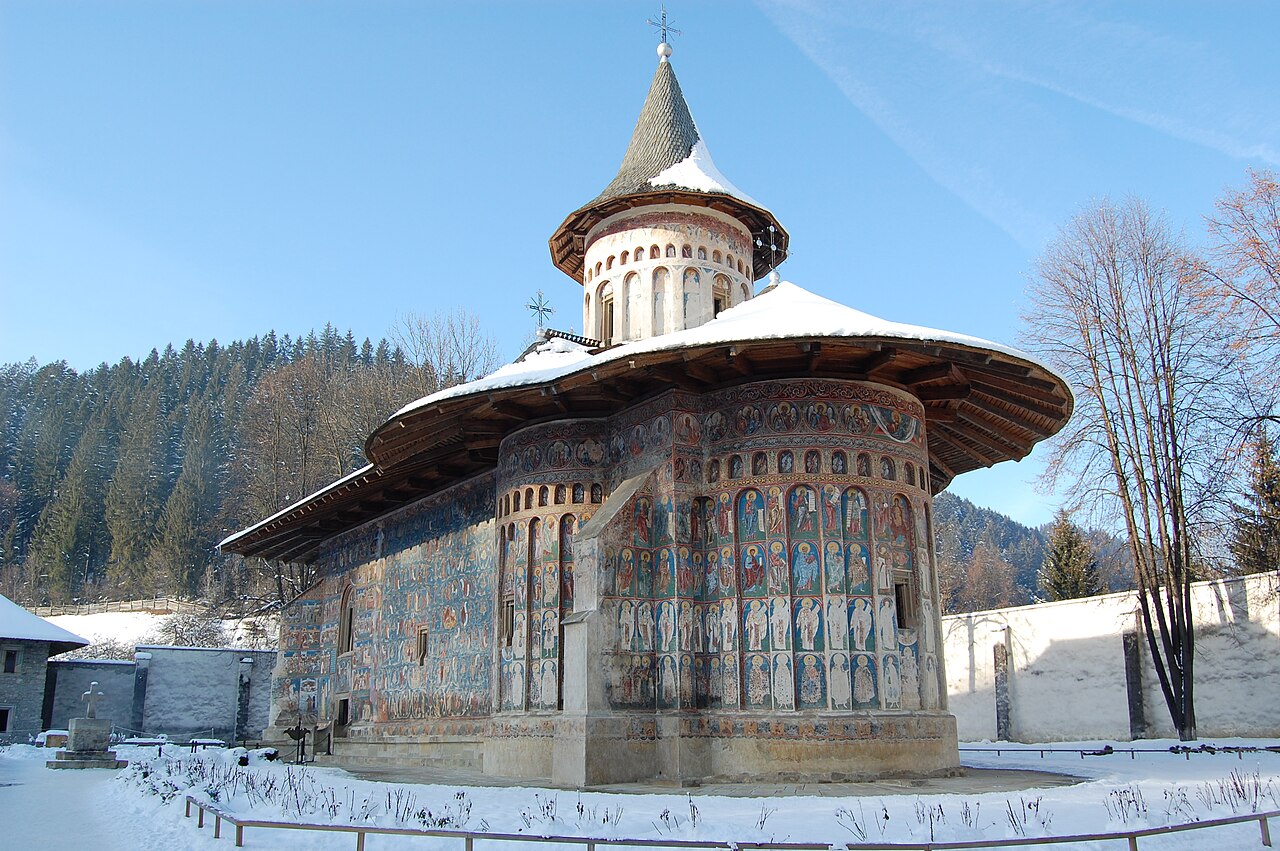
In the green hills of Bucovina in northern Romania, a group of small monasteries stand behind fortified walls, each with a church whose outer walls are painted with biblical scenes. The pictures, in deep blues, greens, reds and golds, were meant to be read by worshippers who could not read.
Voroneț is famed for its Last Judgement and a shade of blue now known as Voroneț blue, while Sucevița has green-toned walls and a fortress-like wall around it. Moldovița, Humor and Arbore are also worth a visit, and the churches can be seen in a long day by car.
History
The painted churches were built mostly between the late fifteenth and the sixteenth centuries in the medieval principality of Moldavia, at a time when its princes were fighting to stay independent from the Ottoman and other powers. Stephen the Great, who ruled from 1457 to 1504 and built many churches after his victories, founded Voroneț in 1488, and its exterior frescoes were added in 1547. The paintings on the outside walls were partly a way to tell sacred stories to a mostly illiterate population, and they also had a defensive meaning: scenes such as the Siege of Constantinople reflected the threat of Ottoman advance. Sucevița, one of the last, was built in the 1580s and painted in 1595 and 1596. After a long period of decline, the churches were restored, and eight of them were inscribed by UNESCO, starting in 1993, as the Churches of Moldavia. Many are again working convents, and nuns look after the grounds.
UNESCO World Heritage: Inscribed 1993.