Palace of the Parliament (Bucharest)
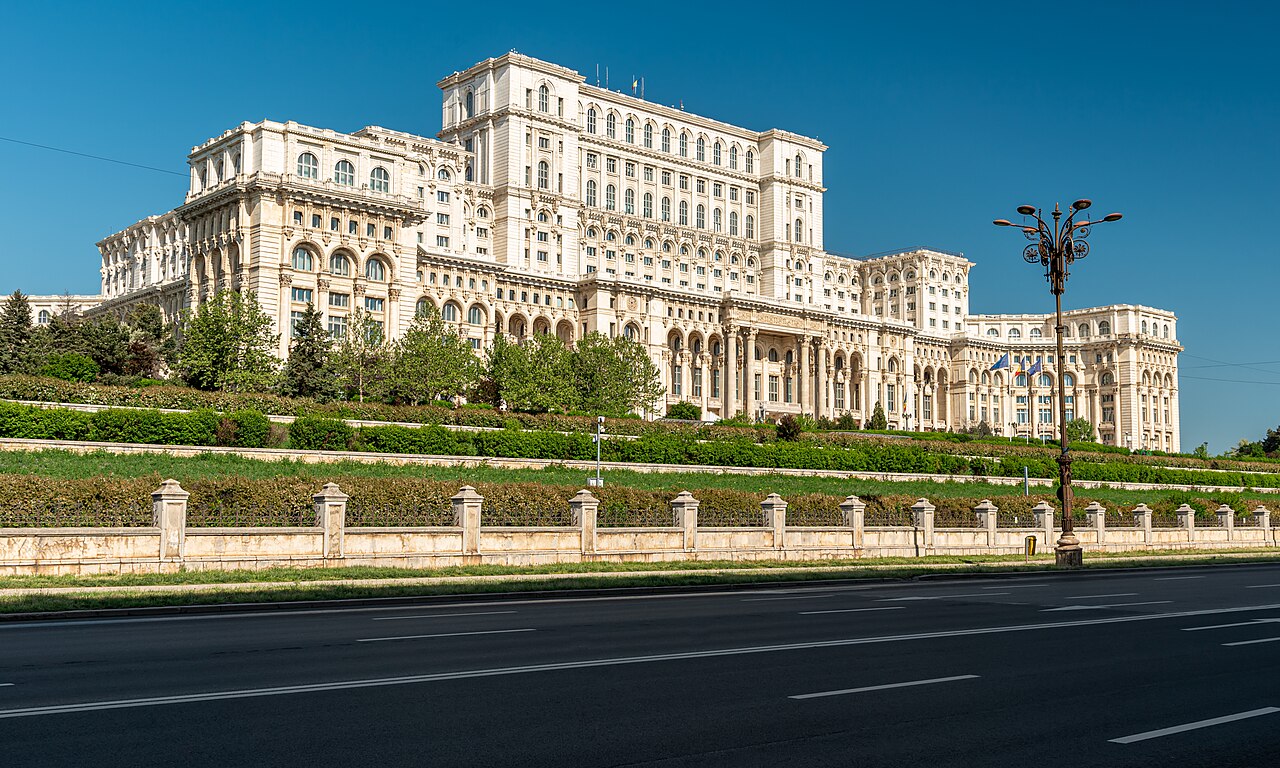
Ceaușescu’s colossal palace, one of the largest administrative buildings in the world.
About
The palace is an enormous block of marble and stone on a hill in central Bucharest, with a vast façade, a great balcony and long avenues leading to it. It is among the heaviest and largest buildings on Earth, with over a thousand rooms and many floors below ground.
Guided tours show marble halls, giant chandeliers, huge carpets and carved wood, and the building now houses Parliament and a museum of contemporary art. Visits must be booked ahead, and you need your passport or ID to enter.
History
Nicolae Ceaușescu, Romania’s communist dictator, ordered the palace built in the early 1980s after an earthquake in 1977 gave him a pretext to clear a historic district of Bucharest. Construction began in 1984 under the young architect Anca Petrescu, and about 7,000 buildings in the old city, including churches, a monastery and a hospital, were demolished to make room. Tens of thousands of workers and soldiers laboured on it, and Romanian materials such as marble, wood and crystal were used throughout, at a time when much of the population faced shortages of food and heating. Ceaușescu was overthrown and executed in December 1989 before it was finished. Work continued afterwards, and since the 1990s it has housed the Romanian Parliament. It is often listed as the heaviest building in the world and the largest civilian administrative building, after the Pentagon in some measures, and it remains a symbol of the cost of the regime.