Peleș Castle (Sinaia)
A lavish neo-Renaissance royal palace in the Carpathian foothills, built in the late nineteenth century for King Carol I.
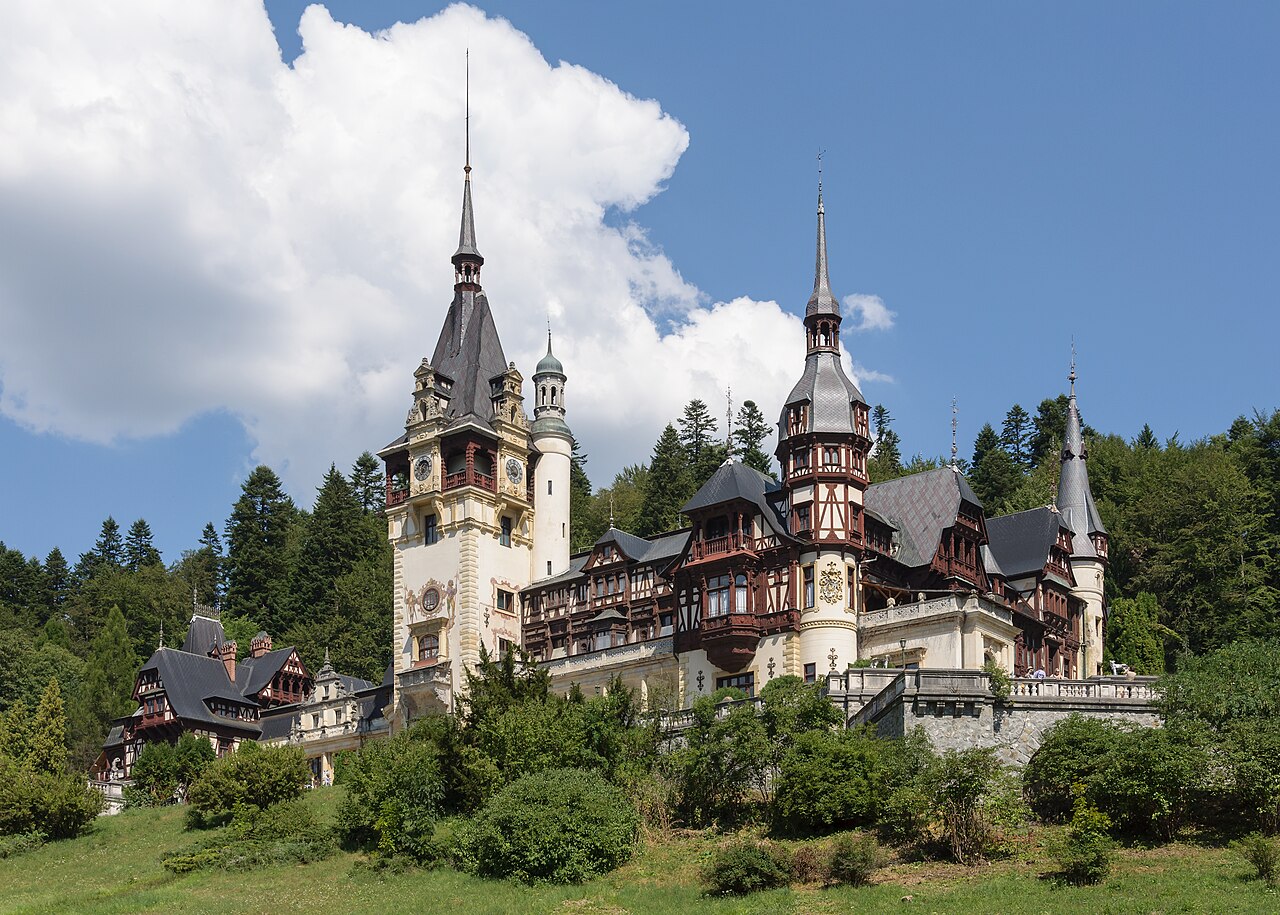
About
Peleș stands in a forested valley above the mountain town of Sinaia, a fairy-tale mix of half-timbering, towers, carved wood and decorated façades. Its many roofs and turrets rise from a park of terraces, fountains and statues.
Inside, the rooms are lined with carved wood, painted ceilings, stained glass, tapestries and collections of weapons and art, with a theatre and a great hall with a retractable ceiling. Visits are by guided tour, and the grounds are free to walk.
History
Carol I, a German prince who became ruler of Romania in 1866 and its first king in 1881, chose this valley for a summer residence. Work began in 1873 to plans by the German architect Johannes Schultz, and the main buildings were largely completed by 1883, with later additions under the Czech architect Karel Liman, who finished the castle in the early 1900s. The result mixes German Renaissance, Gothic and other styles, and it is often said to have been among the first castles in Europe with electricity and central heating. Carol I died here in 1914, and later kings, among them Ferdinand and Carol II, used it as well. After the communist takeover in 1947 it became a museum, and in the early 2000s it was returned to the exiled royal family before the state bought it back. Today Peleș is one of Romania’s most visited monuments.