Sighișoara Citadel
A UNESCO-listed, still-inhabited medieval citadel with a clock tower and colourful houses, and the birthplace of Vlad the Impaler.
About
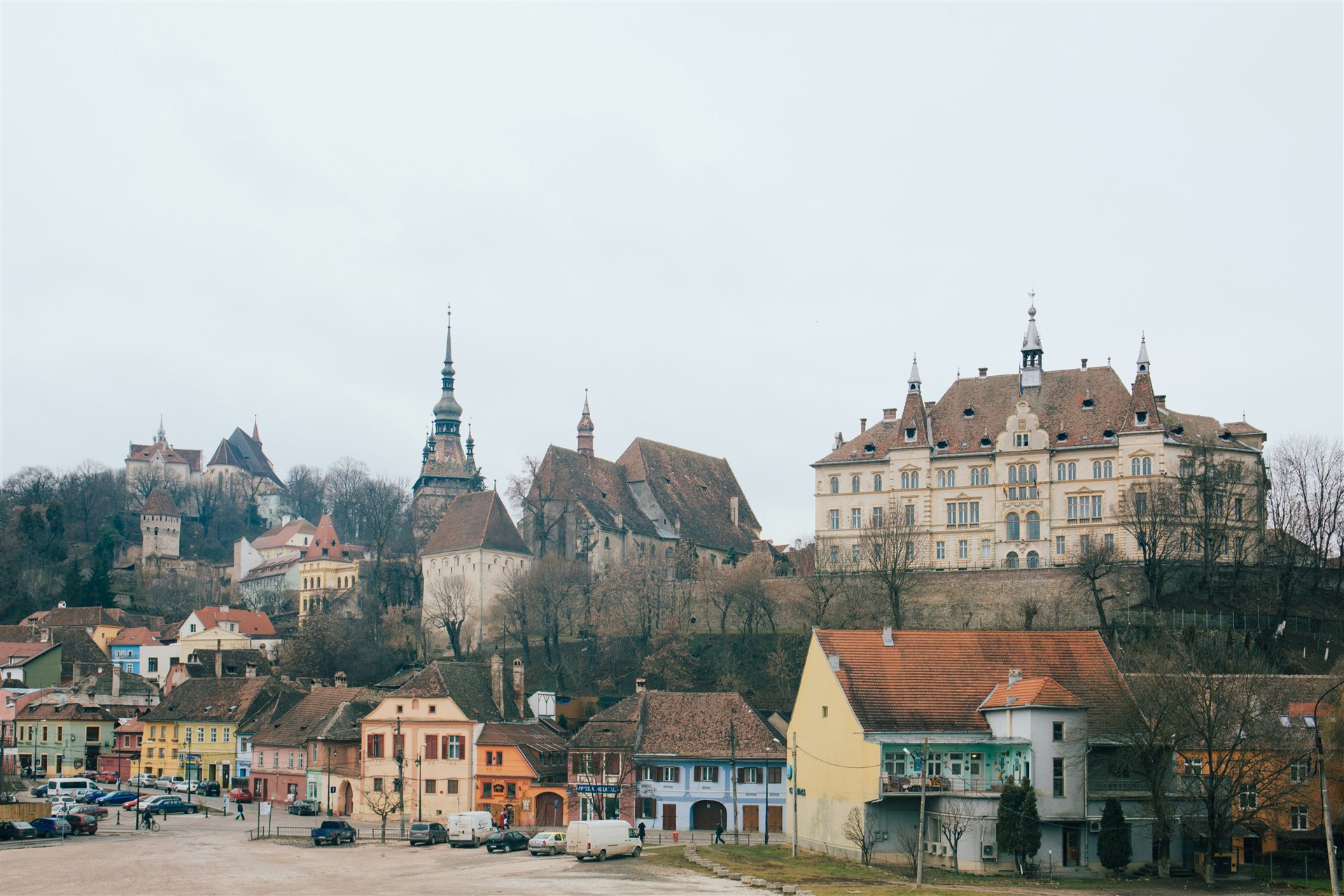
Sighișoara’s upper town sits on a hill inside a ring of walls and towers, with cobbled lanes, pastel-coloured houses and a tall Clock Tower over the main gate. Some 160 families still live inside the walls, so it feels like a town, not a museum.
You can climb the Clock Tower for views and visit its history museum, walk the covered wooden Scholars’ Stairs to the Church on the Hill, and see the yellow house where Vlad Dracul lived, now a restaurant. Walking the whole citadel takes about an hour.
History
Sighișoara was founded in the twelfth century by German-speaking settlers, known as Transylvanian Saxons, who were invited by the Hungarian kings to defend and develop the region. The citadel grew into a trading and craft centre, and its walls were strengthened with towers named after the guilds that defended them, such as the Tailors’ and Butchers’ towers. The Clock Tower, built in the fourteenth century and rebuilt after a fire in 1676, has a clock with moving figures and rises about 64 metres. Vlad Dracul, ruler of Wallachia, lived in the town in the 1430s, and his son Vlad III, later known as the Impaler and linked to the Dracula legend, was probably born here around 1431. The historic centre of Sighișoara was inscribed by UNESCO in 1999 as one of the best-preserved inhabited medieval fortified towns in Europe. Its German name is Schäßburg, and its Hungarian name Segesvár.
UNESCO World Heritage: Inscribed 1999.