Lake Baikal
The deepest and oldest lake on Earth, enormously clear and framed by forested mountains.
About
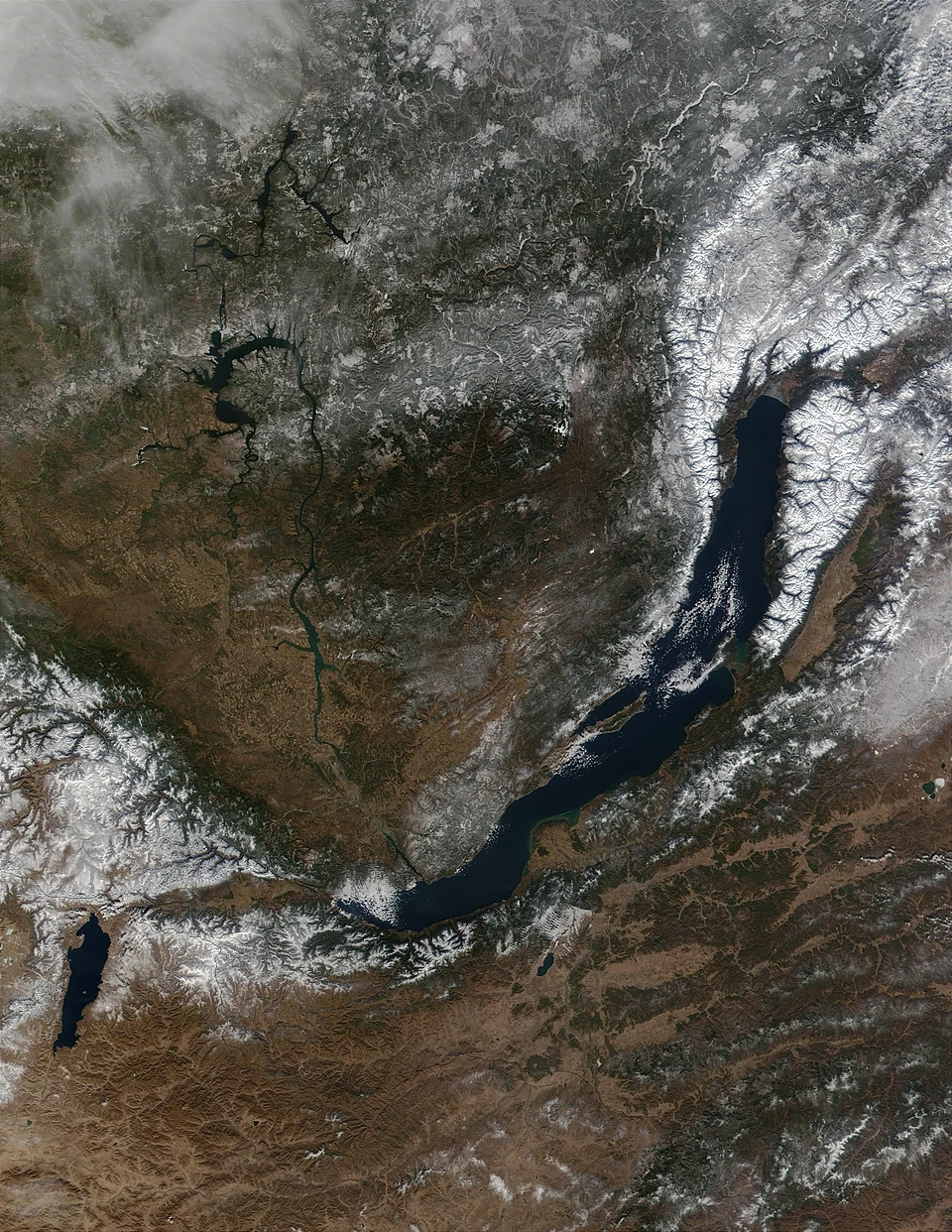
Baikal is about 640 km long and more than 1,600 metres deep at its deepest point, holding a fifth of the planet's unfrozen fresh water. The water is cold and exceptionally clear, and thousands of species, including the Baikal seal, live nowhere else.
In summer you can hike along the shore, take boats between villages and swim briefly in the chilly water. In winter the lake freezes into a vast plain of transparent ice, with ice-walking, skating and cracks that glow turquoise.
Most travellers base themselves in Irkutsk and visit Listvyanka, or go further to Olkhon Island.
History
The lake is roughly 25 million years old and still widening slowly. Buryat communities have long lived around it and regard parts of it as sacred. The Circum-Baikal railway, built in the early twentieth century, still runs along the southern shore. UNESCO listed the lake in 1996. Russian explorers reached the lake in the 1640s, and Irkutsk was founded nearby in 1661. The Trans-Siberian Railway reached the lake shore in the early 1900s. A pulp and paper mill built on the southern shore in the 1960s became a symbol of environmental concern before it closed in 2013.
UNESCO World Heritage: Inscribed 1996.