Mount Elbrus
A twin-peaked snow volcano and Europe's highest mountain by the usual definition.
About
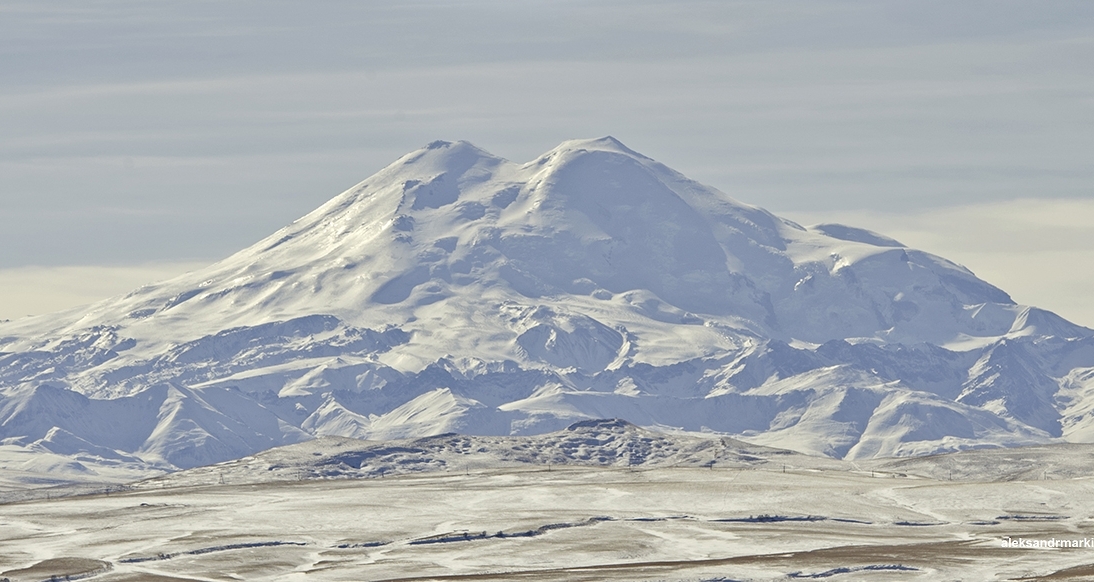
Elbrus rises to about 5,642 metres, a broad, white, twin-headed dome visible from far across the foothills. It is a dormant volcano covered by glaciers, and a popular goal for climbers.
You do not have to climb to enjoy it. Cable cars and chairlifts carry visitors from the village of Azau to around 3,800 metres, with views over the whole range, and there are hiking trails in the Baksan Valley below.
Serious ascents need acclimatisation, proper gear and a guide; weather turns quickly.
History
The mountain has been known to local peoples for millennia, and was first climbed by recorded expedition in the nineteenth century. Soviet-era climbing camps and lifts opened it to more visitors. It now sits within a national park. The lower east summit was first reached in 1829 by Killar Khashirov, a local guide with a Russian scientific expedition, and the higher west summit was first climbed in 1874 by a British party. In the Soviet period climbing camps and cable cars made the mountain far easier to visit. Fighting in the Caucasus reached its slopes in 1942.