Noravank Monastery
A thirteenth-century monastery in a red-rock canyon, known for its two-storey Surb Astvatsatsin church and fine stone carvings.
About
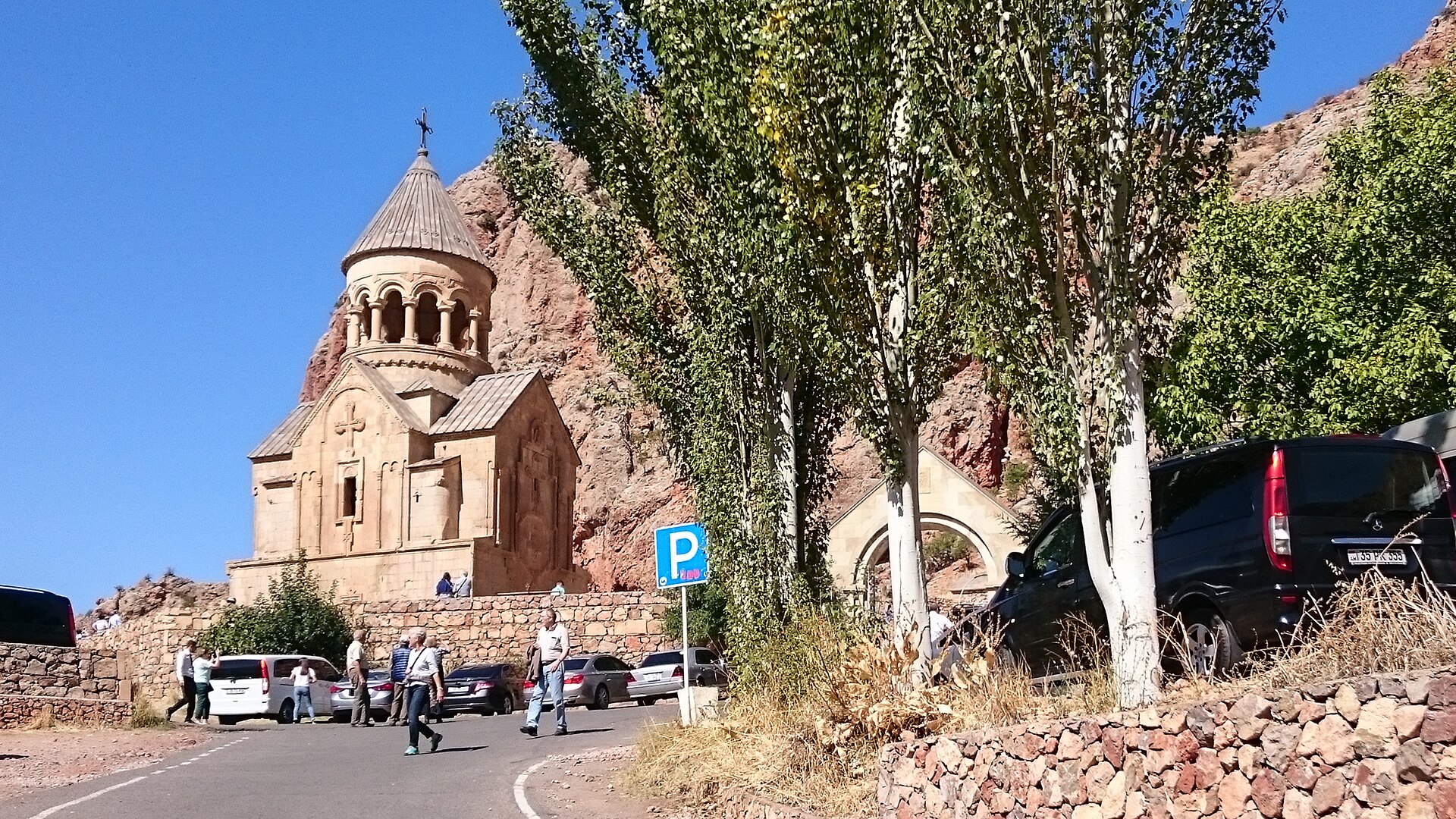
Noravank stands at the head of a narrow gorge, where red and orange cliffs close in on three sides. The monastery’s buildings are made of warm-coloured stone that glows in the afternoon light.
The two-storey Surb Astvatsatsin church has a narrow staircase that projects from the façade, and the doorway is carved with scenes in fine relief. Nearby the village of Areni is known for wine, and the Areni-1 cave holds traces of one of the world’s oldest wine presses.
History
Noravank, meaning new monastery, was founded in 1205 on the site of an older one by Bishop Hovhannes, and it became the burial place of the Orbelian princes, rulers of the region of Syunik. Its heyday came in the thirteenth and fourteenth centuries, when it was a spiritual centre and a school for manuscript painting and sculpture. The Surb Karapet church was built in the early thirteenth century, and the small two-storey Surb Astvatsatsin, or Holy Mother of God, was completed in 1339 by the architect and sculptor Momik, who is buried nearby. An earthquake in 1840 damaged the complex, and parts were restored in the twentieth century, including the dome of the main church in 1998. The nearby Areni-1 cave, discovered in the 2000s, yielded a wine press about 6,000 years old, so the region is often described as one of the oldest winemaking areas.