Sevanavank Monastery
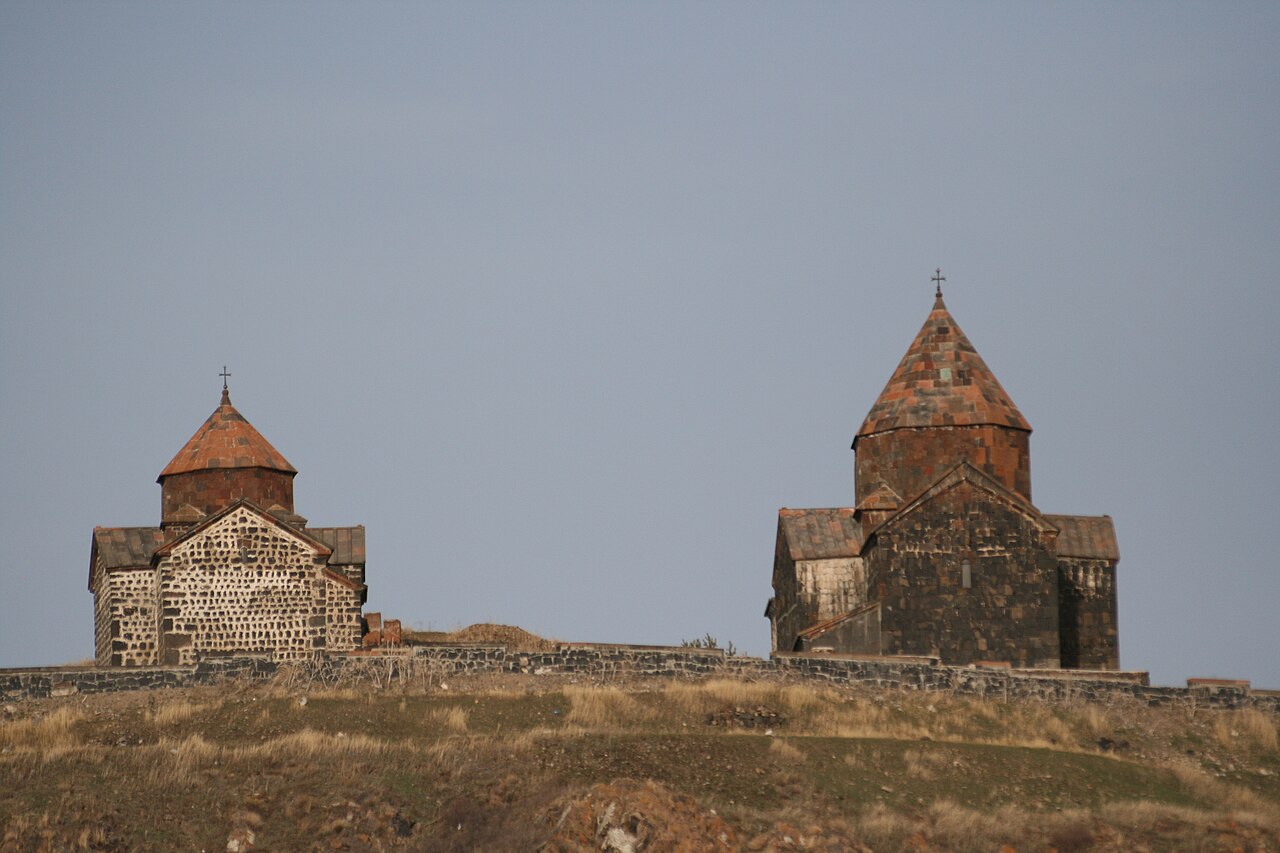
Two ninth-century churches on a peninsula overlooking Lake Sevan, one of the largest high-altitude freshwater lakes in the world.
About
Sevanavank crowns a hill that juts into Lake Sevan, reached by a staircase of about 250 steps. Two small churches of dark stone, Surb Arakelots and Surb Astvatsatsin, stand side by side, with carved khachkars scattered among them.
The lake is wide and deep blue, ringed by treeless hills, and at around 1,900 metres above sea level it is cool even in summer. A sandy beach and cafes line the shore, and the view from the top takes in the whole lake.
History
The monastery was founded in 874 by Princess Mariam, daughter of King Ashot I Bagratuni, who built two churches here on what was then an island. Monks lived in a simple community and the place also served as an exile for clergy who had fallen out of favour. In the Middle Ages, Sevanavank was a spiritual and cultural centre, and a seminary operated here. In the Soviet period, the water level of Lake Sevan was lowered by about 20 metres to supply irrigation and hydropower, and the island became a peninsula. Efforts to raise the level began later, including a tunnel bringing water from other rivers. The churches were restored in the twentieth century, and a modern seminary was reopened in the 1990s.