Yanar Dag
A hillside that has been burning continuously from natural gas seeping out of the ground, especially striking after dark.
About
Yanar Dag means burning mountain. On a low hillside on the Absheron peninsula, a line of flames dances along the rock, with no fuel but the gas rising through cracks in the ground. The flame never goes out, even in rain, and the strip of fire is a few metres wide.
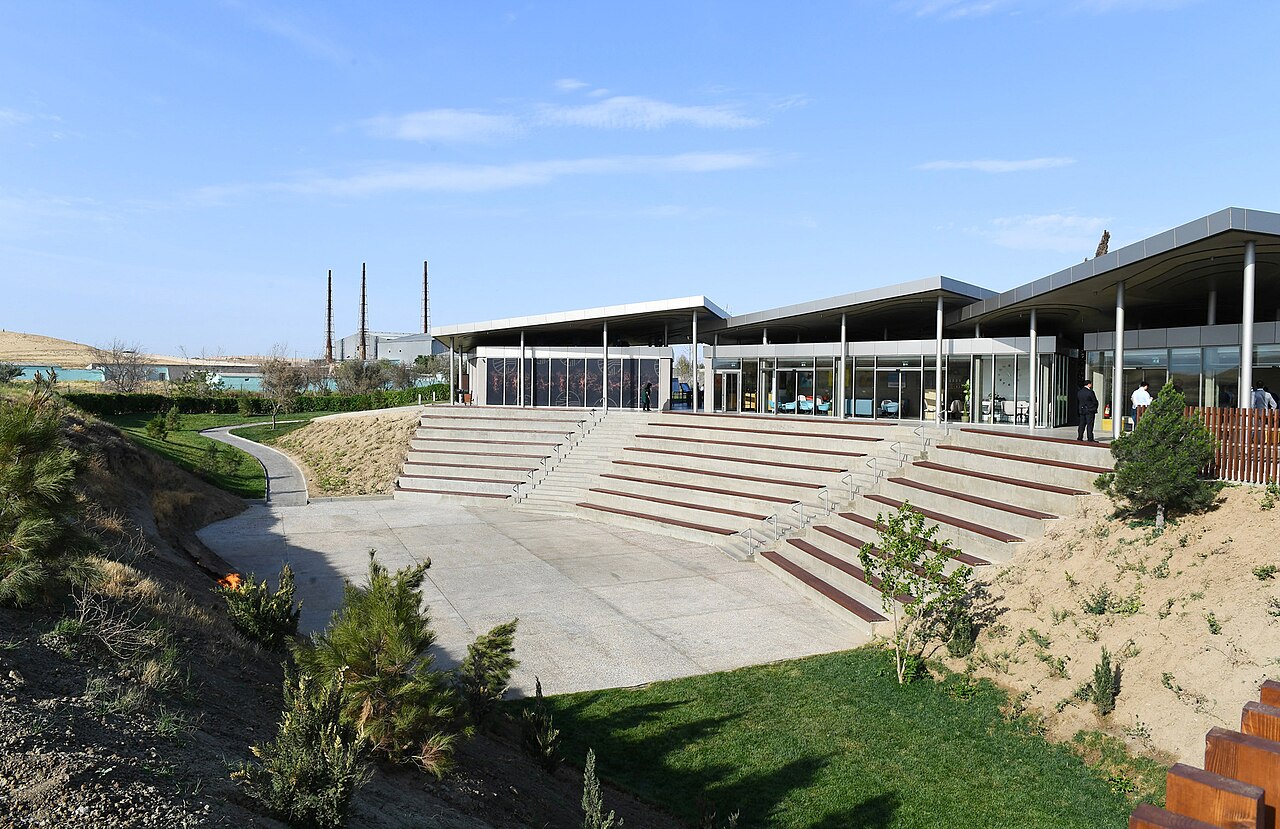
A small museum and tea house stand nearby, and walkways let you get close enough to feel the warmth. The scene is dramatic at dusk, when the flames stand out against the dark hill. It is a short visit, and a strong symbol of why Azerbaijan is called the Land of Fire.
History
Gas has been seeping out of the ground on the Absheron peninsula for a very long time, and travellers over the centuries, including medieval visitors, described burning fires in the region. Many such natural flames have since died out as gas was extracted for industry, which makes Yanar Dag unusual as a survivor. It is commonly said that the present fire on this hillside has burned since the 1950s, when it was set alight, perhaps by a shepherd or by a careless passer-by, and the supply of gas kept it going. The site is now a state-protected reserve and a museum, run alongside the Ateshgah temple as part of the national story of fire. The fires are linked to the region’s rich oil and gas deposits, the same resource that drove the boom of Baku in the nineteenth century and again in the early twenty-first century. In recent years the area has been landscaped for visitors, with a tea house, shops and lighting for evening visits.