Ateshgah Fire Temple (Surakhani)
A fortress-like temple built around a natural gas flame, once used by Zoroastrian and Hindu fire worshippers.
About
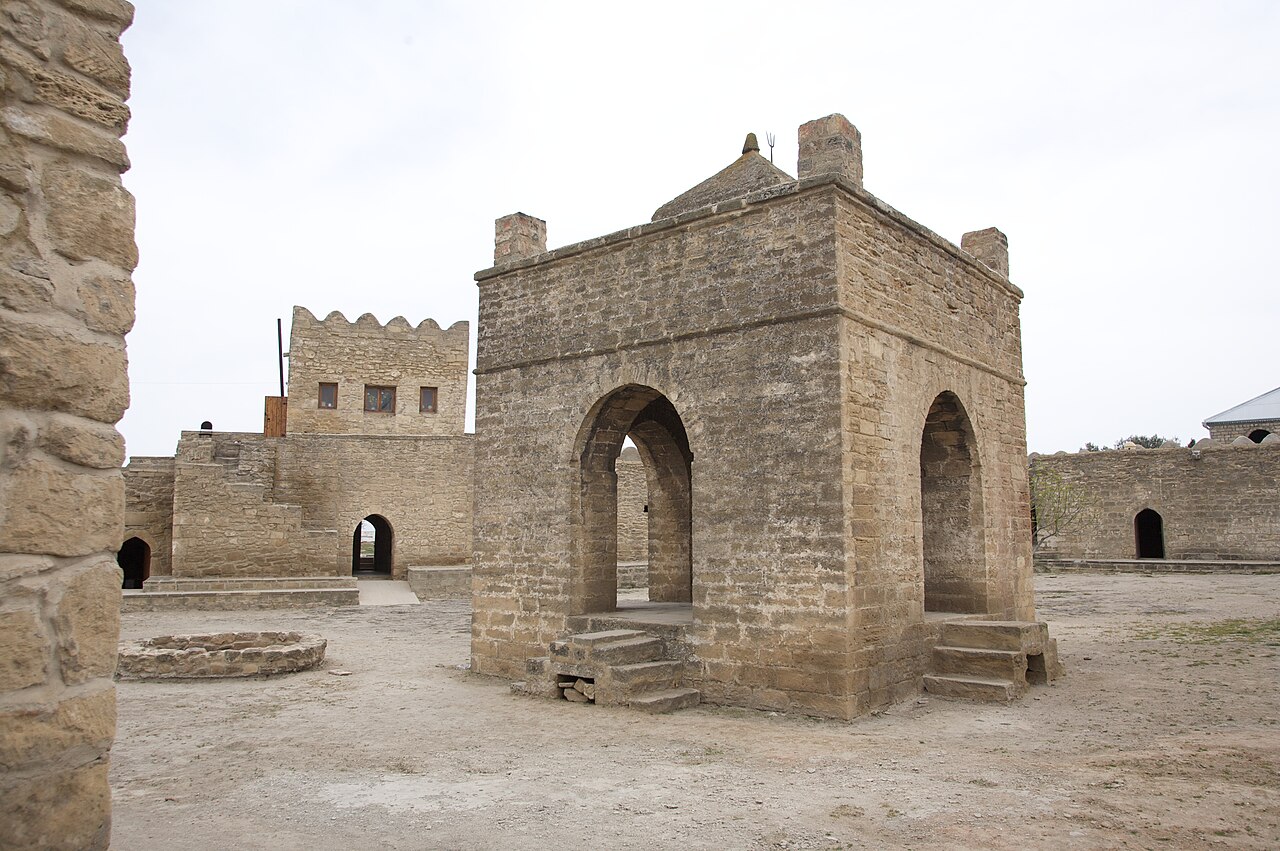
The Ateshgah is a pentagonal stone complex, with a courtyard ringed by small cells, and a central altar shaped like a small pavilion. Its name comes from the Persian for house of fire. Inside the cells, figures and displays show the pilgrims, ascetics and merchants who once stayed here.
Once, a flame burned continuously at the centre of the courtyard, fed by natural gas coming from the ground. Today the flame is lit by gas from a pipeline, but the quiet cells, inscriptions and atmosphere of an old caravan stop remain. It is a short, easy visit and combines well with Yanar Dag.
History
The present buildings date mainly from the seventeenth and eighteenth centuries, when the site was used by communities of Indian merchants and pilgrims, many of them Hindu and Sikh, travelling the Silk Road. Inscriptions in Sanskrit and Gurmukhi in the cells show their presence. The idea that the temple was also a Zoroastrian fire temple is widely repeated, but historians debate how strong the connection is, since there is limited firm evidence. Fire has long been associated with the Absheron peninsula, and travellers over the centuries described the natural flames that rose from the ground. The natural flame at the temple faded in the twentieth century as the underground gas was drawn off by oil and gas extraction, and by 1969 it had gone out. The site was turned into a museum in the 1970s and is now run as a state historical-architectural reserve, with the flame fed from the national gas network.