Madara Rider
An early-medieval rock relief of a horseman carved high into a cliff face, unique in Europe.
About
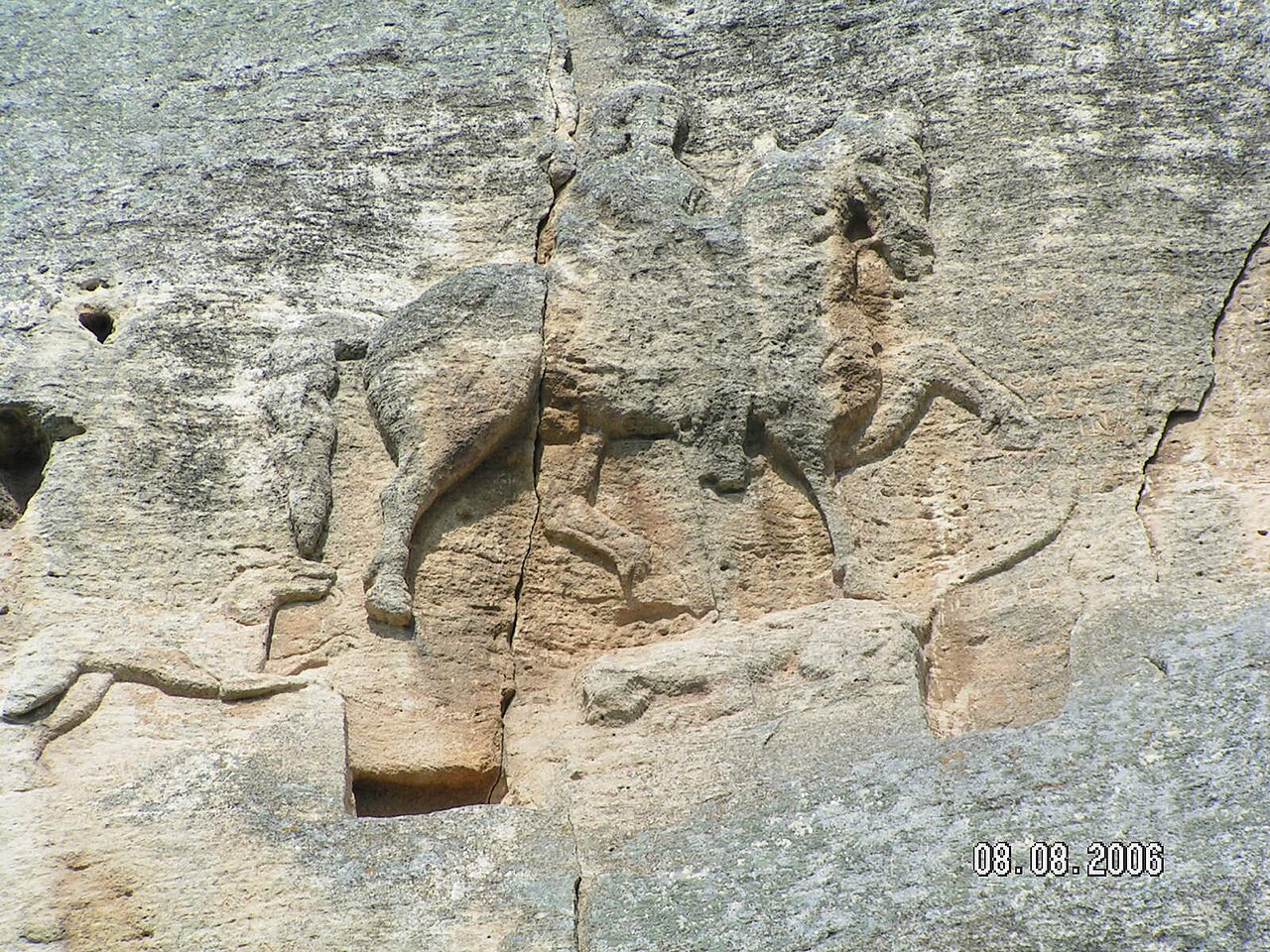
The relief is carved about 23 metres above the ground on a sheer cliff, a figure on horseback spearing a lion, with a dog running behind. It is weathered and the surface is worn, but the outline is clear, and the cliff stands above a wooded plateau.
Greek inscriptions around the figure record events from the reigns of several Bulgarian khans. A stairway of several hundred steps climbs to a viewpoint near the relief, and the plateau above has caves and traces of earlier settlements. A small museum gives the background.
History
The Madara Rider is thought to have been carved around the early eighth century, soon after the First Bulgarian Empire was founded in 681, during the reign of Khan Tervel. Nobody knows exactly who the horseman is, but most scholars think he represents the khan as a victorious ruler, perhaps with links to older Thracian and Persian images of the hero-horseman. Three Greek inscriptions around the relief mention the khans Tervel, Krum and Omurtag, covering the eighth and ninth centuries. The plateau was a sacred place long before that, with a Thracian sanctuary, and the first Bulgarian capital, Pliska, lies not far to the east. The relief was inscribed by UNESCO in 1979 as the Madara Rider, and it appears on Bulgarian coins and national symbols. It is the only one of its kind known in Europe from this period.
UNESCO World Heritage: Inscribed 1979.