Svetitskhoveli Cathedral (Mtskheta)
A great eleventh-century cathedral at the heart of Georgia's ancient capital, said to guard the robe of Christ.
About
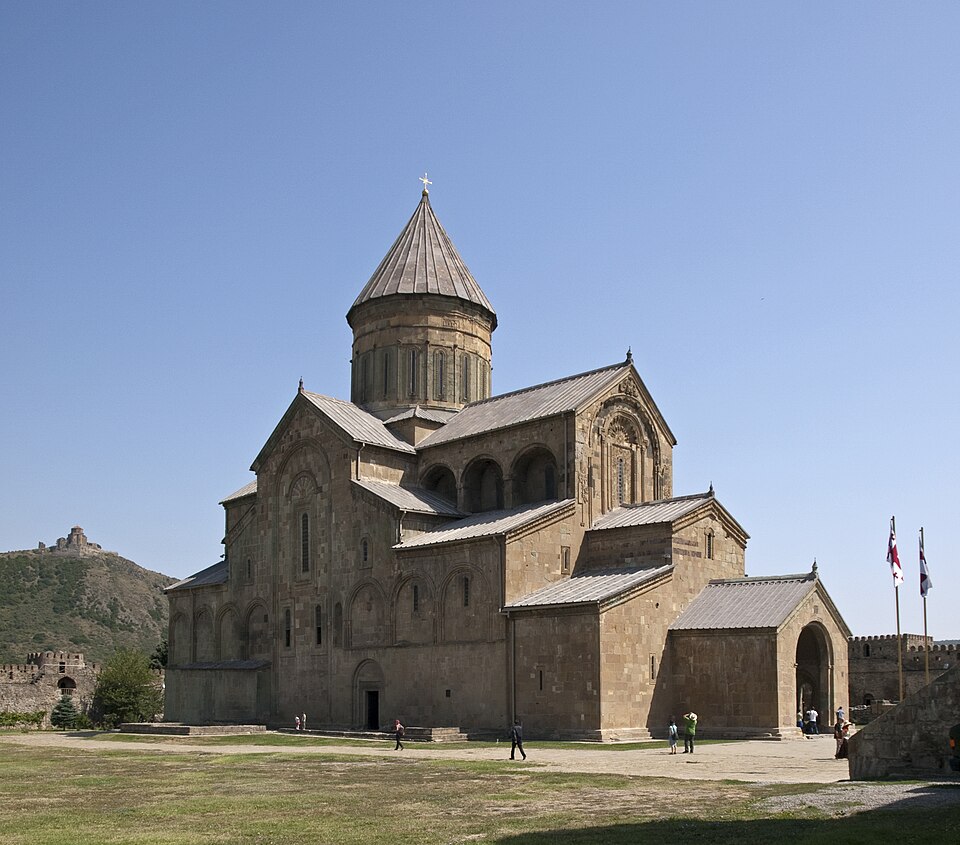
Svetitskhoveli rises in the centre of the small town of Mtskheta, behind a stone wall with a bell tower. Its tall, pale facade is decorated with carved reliefs, and the interior is a large, cool space with painted columns and frescoes.
According to tradition, the cathedral stands over the burial place of Christ's robe, brought to Georgia by a Georgian Jew from Jerusalem. The name means life-giving pillar, and the church is the burial place of many Georgian kings.
History
The present cathedral was built in the early eleventh century, on the site of earlier churches reaching back to the fourth century, when Georgia adopted Christianity. Together with Jvari Monastery and other monuments, it was inscribed by UNESCO in 1994 as the Historical Monuments of Mtskheta. Tradition says the first church here was founded in the fourth century by King Mirian III after his conversion, over the grave of Sidonia, who was said to have died holding Christ's robe. The present building was designed by the architect Arsukisdze and consecrated in 1029. Over the centuries invading armies damaged it, and it was repeatedly repaired.
UNESCO World Heritage: Inscribed 1994.