Tash Rabat
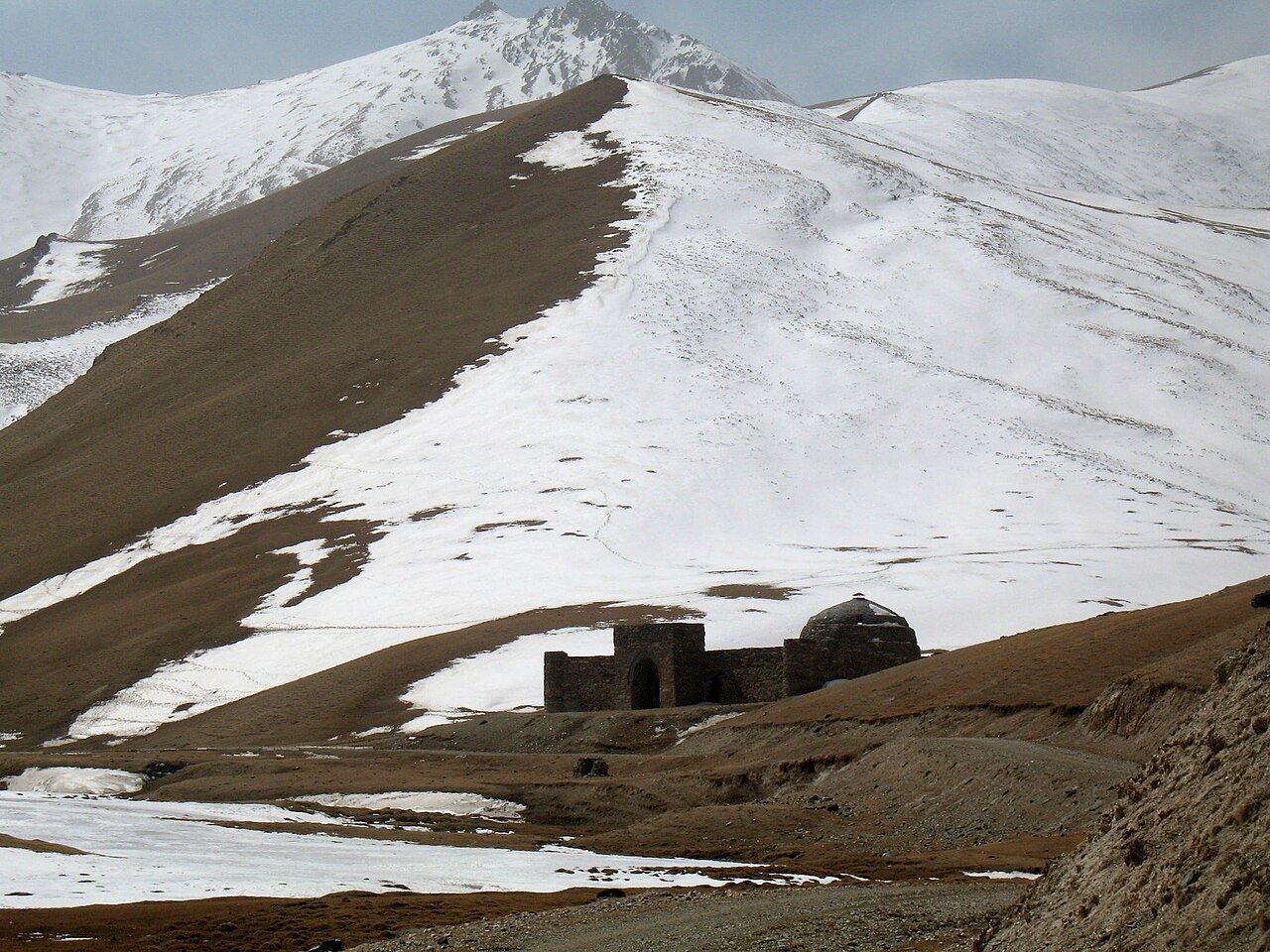
A fifteenth-century stone caravanserai tucked into a remote valley near the Chinese border, once a shelter for Silk Road traders.
About
Tash Rabat sits at about 3,200 metres in a quiet valley of grassy slopes and rocky ridges, and the low stone building blends into the hillside. A dark entrance leads into a maze of vaulted corridors, domed halls and small cells.
The building has around thirty rooms, and its thick walls kept travellers safe from weather and bandits. Yurt camps stand nearby, and you can ride horses along the valley or walk to Chatyr-Kul lake, with a quiet feel that few places in Central Asia match.
History
The surviving building dates mainly from the fifteenth century, when it served as a stop for merchants and pilgrims on a branch of the Silk Road linking Kashgar in China with the Fergana Valley and the lands to the north-west. Some scholars suggest that an earlier structure, possibly a tenth-century monastery of the Nestorian Christian church, stood here before, though the evidence is limited. The name means stone caravanserai, rabat being the Arabic and Persian word for a fortified roadside inn. The valley lies near the Torugart Pass, one of the old routes through the mountains to China, which is still used today. The building was largely buried and forgotten until it was cleared and restored in the 1970s, and it became a popular tourist site in the following decades. Because of its height and distance from towns, it is among the more remote of Kyrgyzstan’s historic sites.