Geghard Monastery
A thirteenth-century monastery partly carved into the cliff, with rock-cut chapels and remarkable acoustics.
About
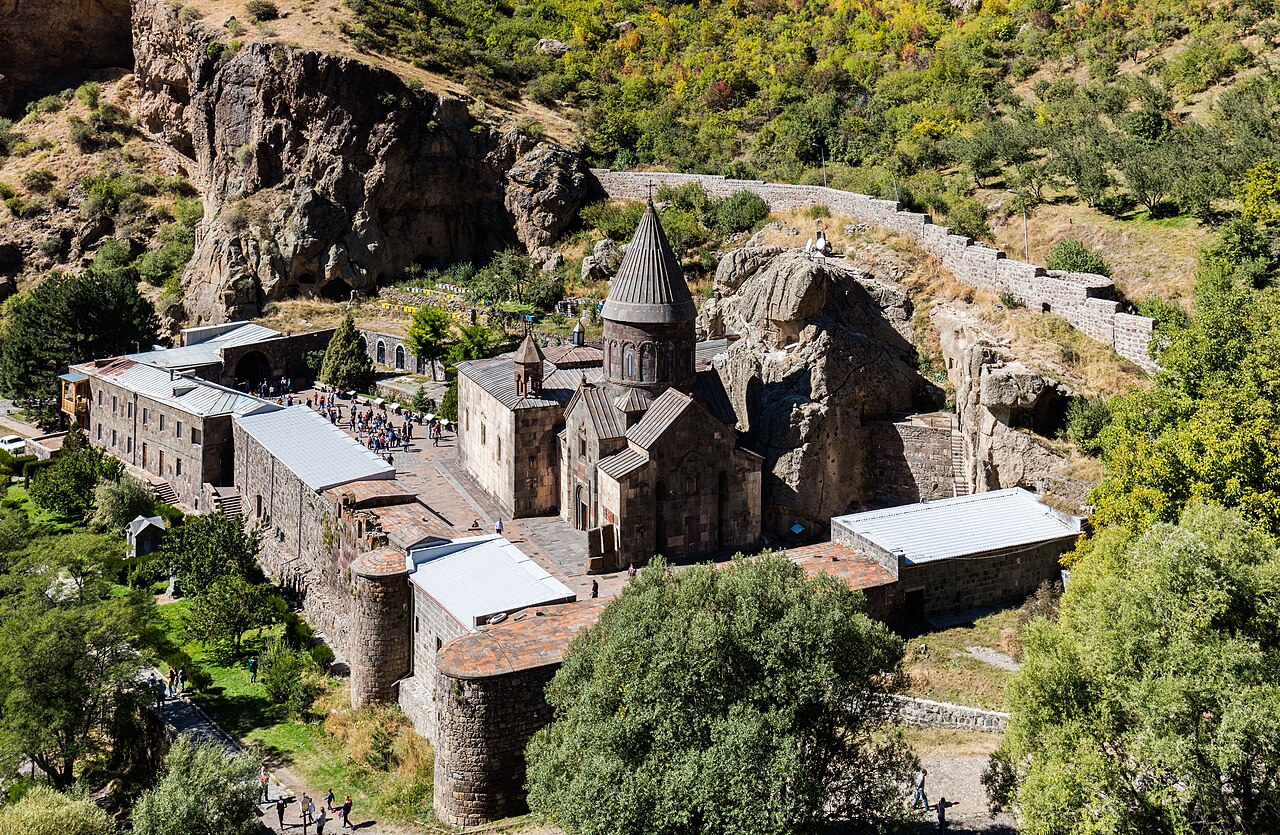
Geghard sits at the end of the Azat valley, hemmed in by tall cliffs. Its walls and domed churches look as if they grow from the rock, and several of its chapels and rooms are cut straight into the mountain.
Inside the dark rock-cut halls, carved crosses and khachkars cover the walls, and a spring flows from the cave. The acoustics are remarkable: if a choir or a visitor sings here, the sound seems to fill the whole space.
History
A monastery stood on this site from the fourth century, according to tradition founded by Gregory the Illuminator beside a sacred spring, and it was originally called Ayrivank, the monastery of the cave. The name Geghard, meaning spear, came later, when the lance said to have pierced Christ, brought to Armenia by the apostle Thaddeus, was kept here; it is now held in the treasury at Etchmiadzin. The main church, the Katoghike, was completed in 1215, and a rock-cut chapel and the gavit were added in the following decades under the Zakarian princes and later the Proshian family. Arab raids, and later conquests, damaged the older buildings, but the rock-cut parts survived. The complex was inscribed by UNESCO in 2000 together with the Upper Azat Valley, and it remains an active monastery and a place of pilgrimage.
UNESCO World Heritage: Inscribed 2000.