Vardzia
A twelfth-century cave city carved into a cliff face, with chapels, frescoes and hundreds of rooms.
About
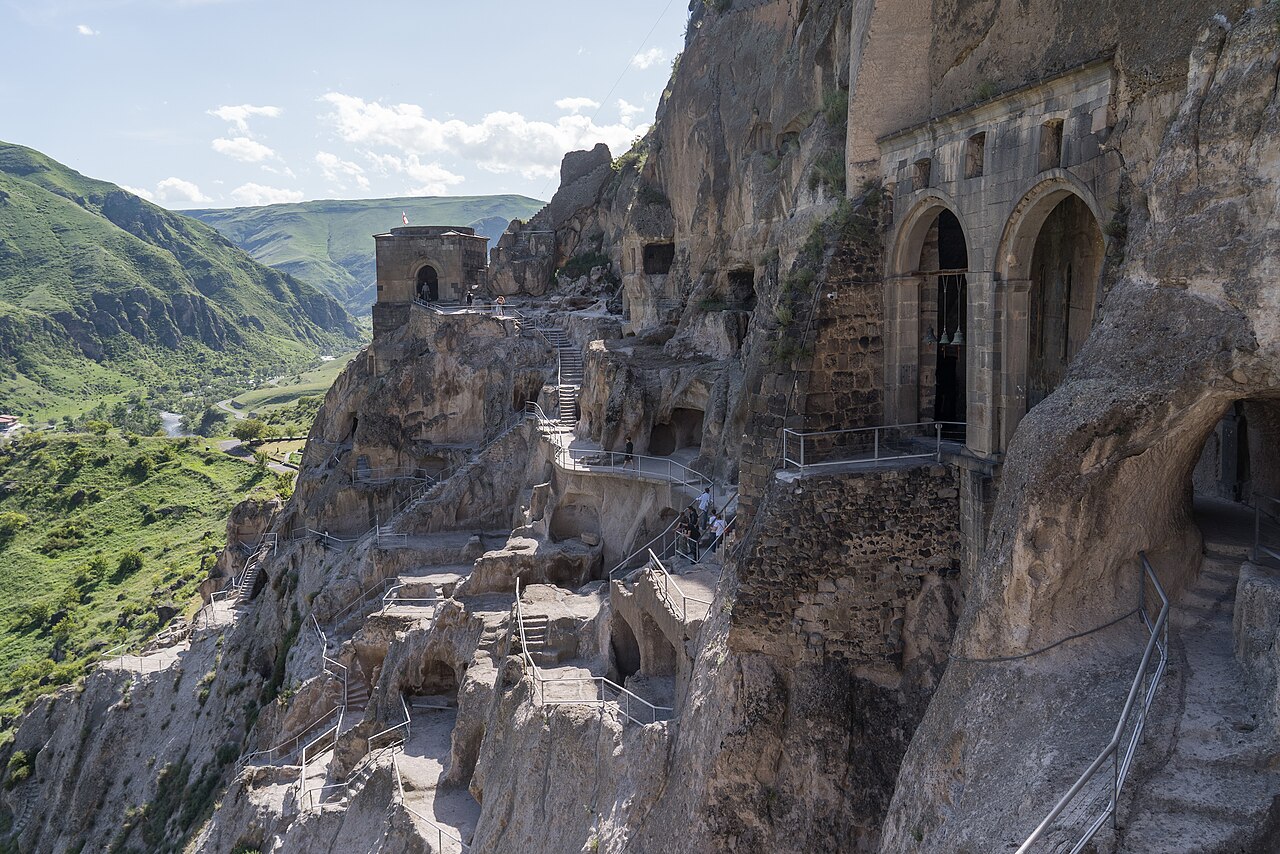
Vardzia is cut into the Erusheti mountainside above the Mtkvari river in the south of Georgia. Hundreds of rooms, linked by tunnels, stairways and terraces, rise in many levels from the valley floor, with a central church whose walls still hold painted frescoes.
Visitors can walk through narrow passages and into chapels, living rooms and storehouses, with views over the valley from openings in the rock. Wear shoes with good grip, and bring a torch for the darker tunnels.
History
Work began in the twelfth century under King George III and was largely completed under his daughter, Queen Tamar, as a fortified monastery guarding the border. An earthquake in the late thirteenth century sheared away part of the cliff face, exposing many rooms to view. A popular legend says that the young Tamar, playing here, called out to her uncle King George from inside the caves, and the words 'I am here, uncle' gave the site its name. Persian forces captured the complex in the sixteenth century, after which monastic life declined. Monks returned in the 1990s, and Vardzia is again a working monastery.