Issyk-Kul Lake
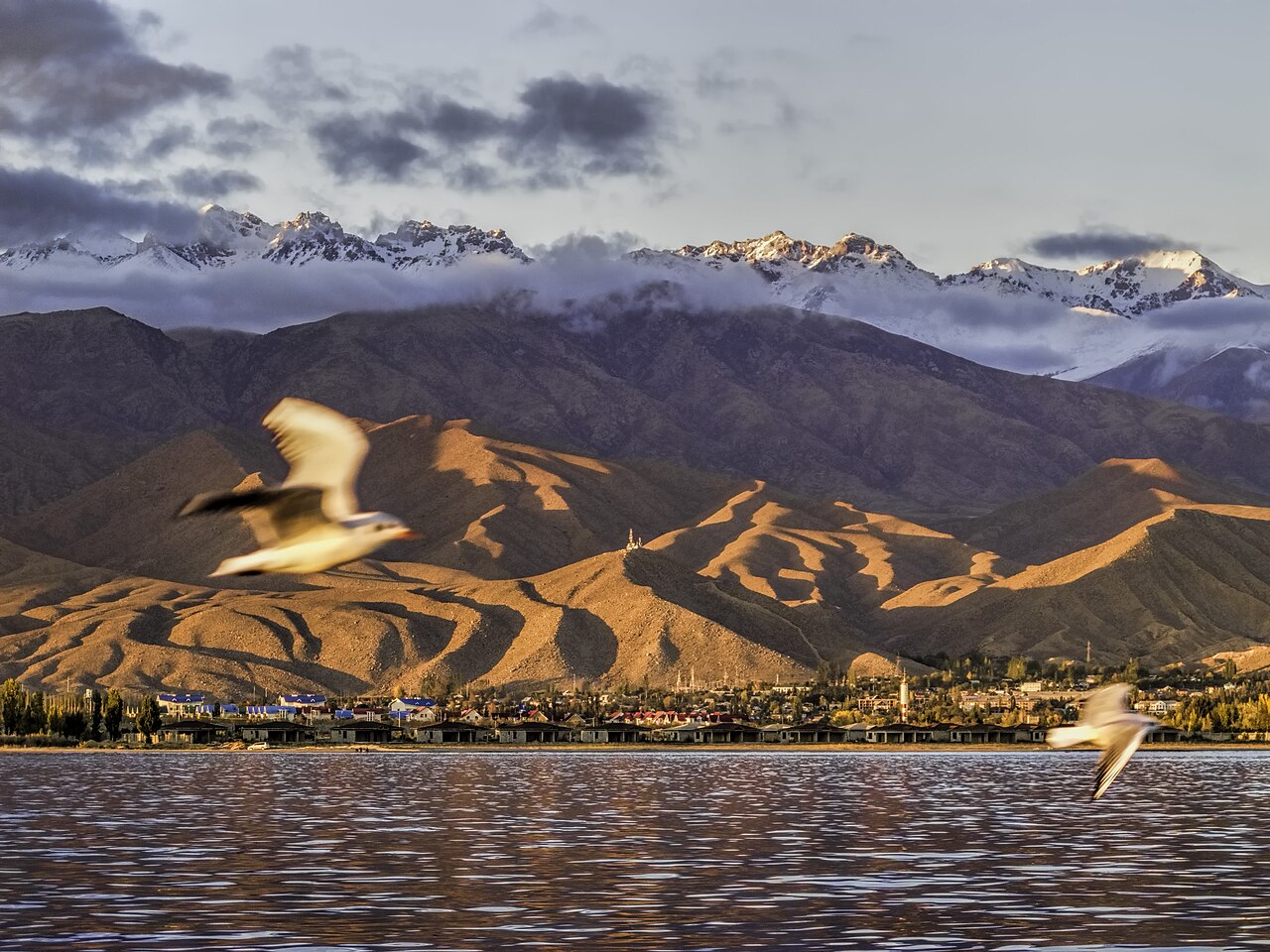
One of the largest alpine lakes in the world, ringed by the Tien Shan mountains. It never freezes despite its altitude, earning the nickname "warm lake".
About
Issyk-Kul stretches for about 180 km across the north of Kyrgyzstan, a huge blue lake at 1,600 metres, framed by snowy peaks. The north shore has sandy beaches and Soviet-era resorts, while the south shore is wilder, with canyons and villages.
Swimming is possible in summer, and the water is slightly salty. Visitors can ride horses, hike in side valleys, soak in hot springs and try local food at lakeside cafes. The town of Karakol at the eastern end is a good base for the mountains.
History
Issyk-Kul is one of the deepest lakes in the world, reaching about 668 metres, and its name means warm lake in Kyrgyz, because the water rarely freezes even in the hard winters. Its great depth, slight salinity and the underwater hot springs help it stay ice-free. Travellers on the Silk Road passed along its shores, and the seventh-century Chinese monk Xuanzang described the lake in his writings. Local legends speak of ancient cities beneath the water, and archaeologists have in fact found Bronze Age and later settlements submerged near the shore. In the twentieth century, the Russian explorer Nikolai Przhevalsky died near Karakol in 1888, and a memorial park marks his grave; in the Soviet era, the lake was also used as a testing site for naval equipment. Today the lake and its surroundings form a UNESCO biosphere reserve and the heart of Kyrgyzstan’s tourism.