Otrar
Ruins of a Silk Road city where the philosopher al-Farabi was born.
About
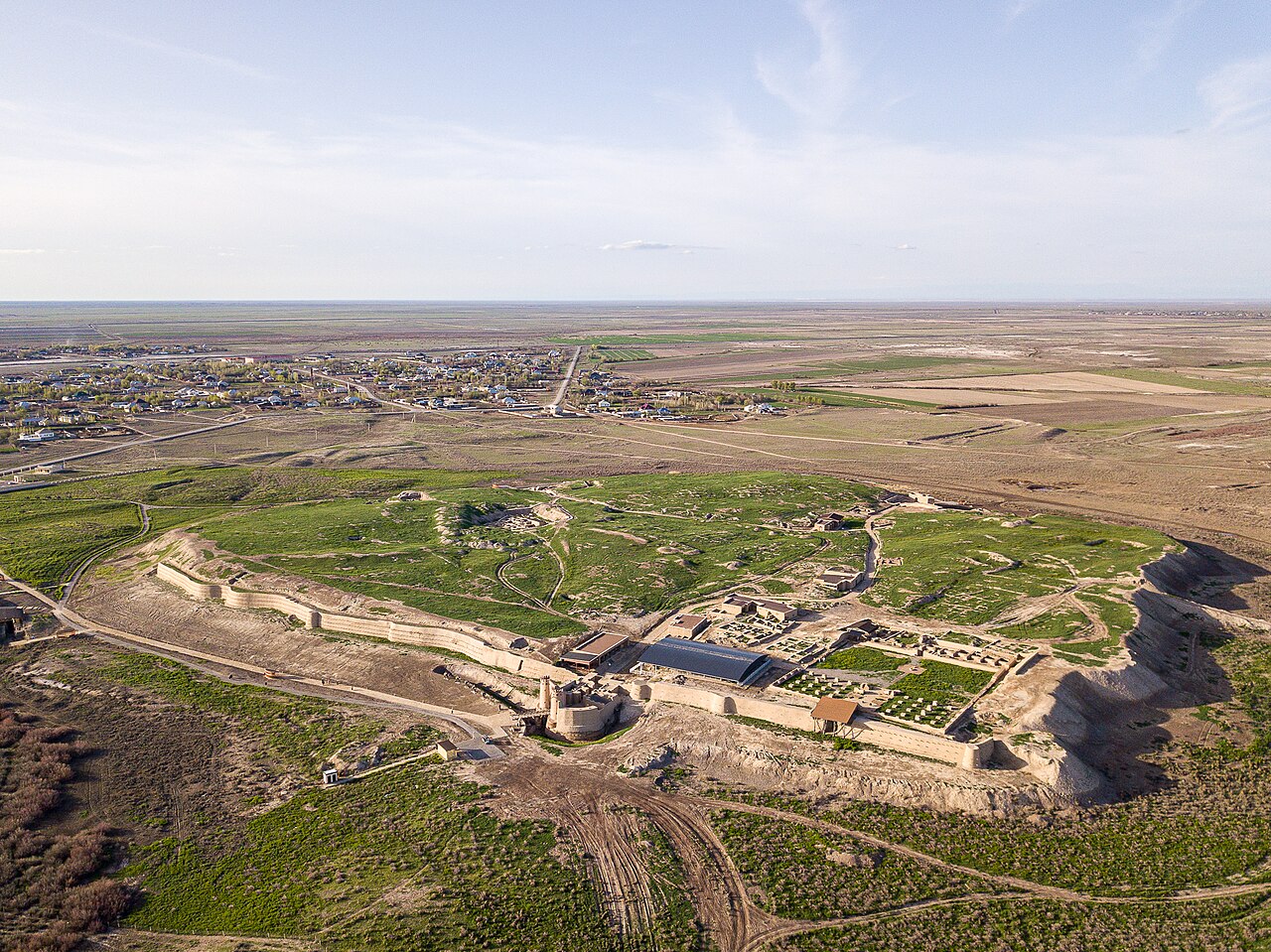
Otrar is a wide, empty plain with a large earth mound, the remains of walls and the outlines of streets and houses, all in pale brown mud brick. There are no grand standing monuments, but the scale of the site hints at a once-rich city.
A small museum and the reconstructed parts of the site give some context. On the way from Turkestan, you can also stop at the twelfth-century Arystan Bab Mausoleum, which is a quiet pilgrimage site, and visit the nearby Sauran ruins.
History
Otrar, also known as Farab, was a major Silk Road city on the Syr Darya, where caravans stopped between the steppe and the cities of Central Asia, and it was home to a famous library. The philosopher and scientist al-Farabi, known in the West as Alpharabius, was born in the region around 872 and became one of the great thinkers of the Islamic world. In 1219 the city’s governor killed a group of merchants sent by the Mongol ruler Genghis Khan, an event that is said to have provoked the Mongol invasion of the Khwarazmian empire, and Otrar was besieged for months and destroyed. The city recovered for a time, and in 1405 the conqueror Timur died here while on his way to campaign against China. Otrar declined in later centuries as trade routes shifted and the river changed, and it was abandoned. Excavations since the twentieth century have revealed its walls, citadel and streets, and the site is now an archaeological park.