Transfăgărășan Highway
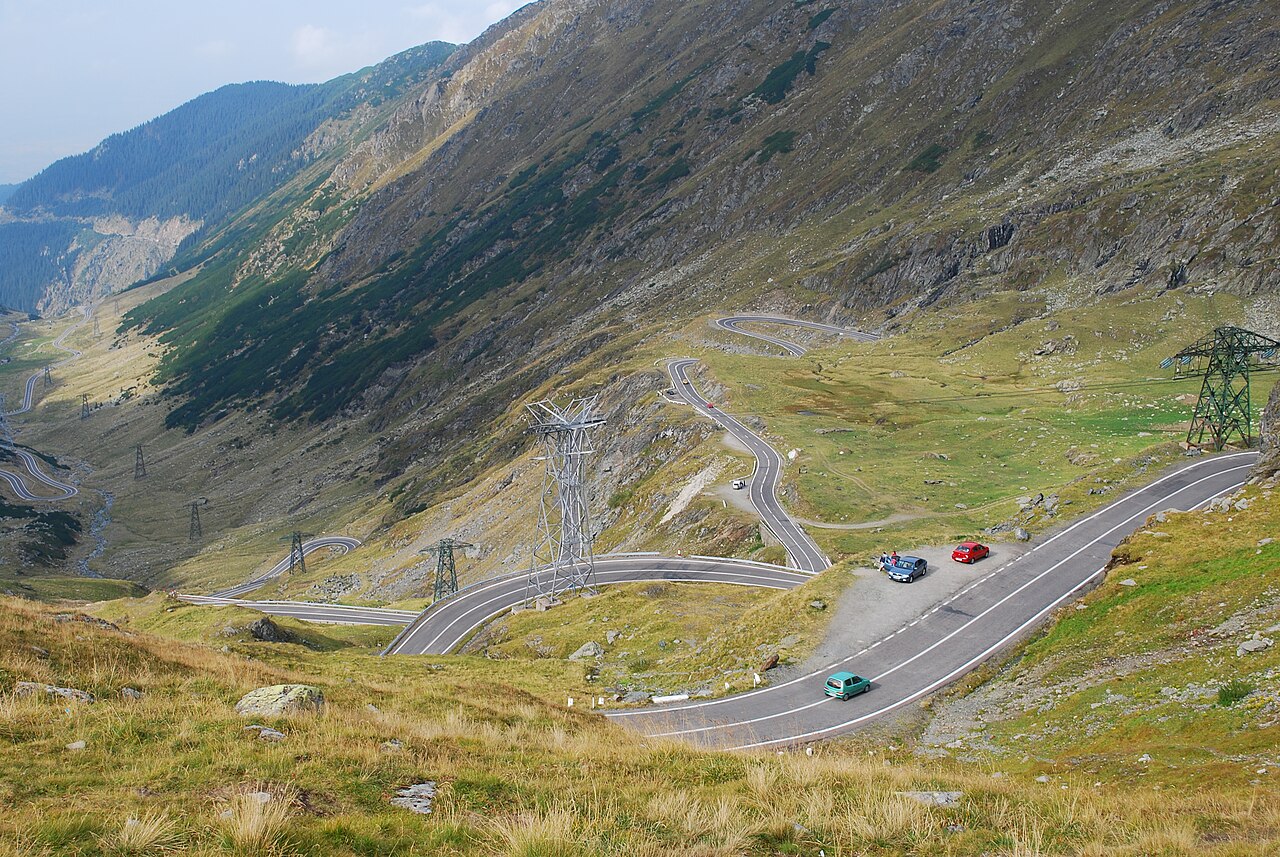
A spectacular road that switchbacks across the Făgăraș Mountains, passing Bâlea Lake. Open only in summer.
About
The road climbs from forested valleys to a pass at about 2,040 metres, through hairpin bends, tunnels and viaducts, with bare ridges and glacial lakes at the top. It is often counted among the most dramatic mountain roads in Europe.
Near the top, Bâlea Lake lies in a glacial bowl beside a small chalet resort, and a cable car runs up from the lower side. On the way you can stop at the Vidraru dam and lake and see the ruins of Poenari Fortress, linked to Vlad the Impaler.
History
The Transfăgărășan was built between 1970 and 1974 under the communist leader Nicolae Ceaușescu, as a military route across the Carpathians. The decision followed the 1968 Soviet-led invasion of Czechoslovakia, which made Romanian leaders fear a similar move against their country and want a quick way to move troops over the mountains. The work was done largely by soldiers using dynamite on steep rock, and a number of workers are reported to have died. The road runs about 90 km, linking Transylvania with Wallachia, and it reaches 2,042 metres at its highest point near Bâlea Lake. It never became a major military artery, but it turned into a famous tourist road, and the BBC programme Top Gear once called it the best road in the world. Because of snow, the high section is normally open only from about late June or July until October.